

At a glance
Queensland University of Technology is hiring a Procurement Improvement Lead on a two-year HEW8 contract. We unpack the salary, duties, selection criteria and the 8 November 2026 deadline.

A Two-Year Mandate to Fix How a University Buys
Queensland University of Technology is advertising a Procurement Improvement Lead — reference number 26579 — and the title does most of the explaining. This is not a routine buying job. The successful applicant gets two years, on a fixed-term, full-time basis, to design the processes, tools, guidance and training that pull the university's purchasing toward a consistent, centre-led model.
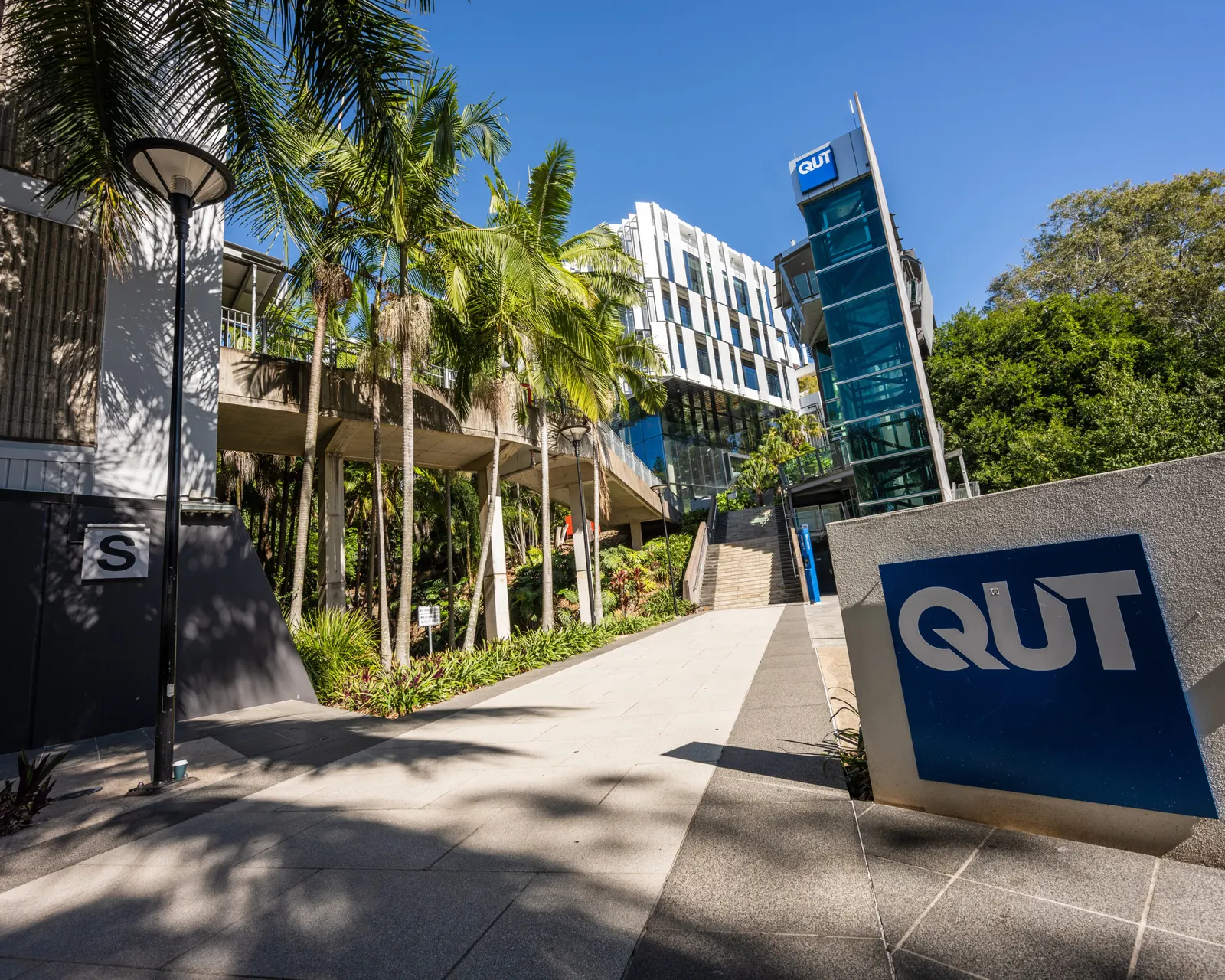
Applications close at 11.30pm on 8 November 2026. The role sits at the Kelvin Grove campus with a hybrid option, inside Finance Business Solutions, the Chancellery Division unit that runs QUT's finance, planning and procurement services.
What the Job Actually Does
The advertisement separates improvement from administration deliberately. The lead designs procurement processes and tools rather than simply running them, and that design work is the point of the hire. Building procurement capability through education and training runs alongside exploring digital solutions, with both feeding into strategic sourcing and contracting. The role spans design and delivery.
Two phrases in the ad carry weight. "Centre-led procurement model" is the steady shift away from every faculty and division buying in its own way. "Benefits realisation" is the discipline of proving a new process saved money or time instead of claiming it did. QUT has been moving this way for years; this role is the capacity that turns direction into habit.
HEW8 — Higher Education Worker level 8 — is the senior professional band in Australian university enterprise agreements. It sits above the transactional officer grades and below the HEW9 management band, which is a fair description of the job itself: senior enough to own improvement, not yet a people-management role.
What HEW8 Actually Pays at QUT
QUT publishes the package as $138,193 to $156,633 a year. Unpack it: a base salary of $116,774 to $132,357, plus 17 per cent superannuation and 17.5 per cent recreation leave loading. The headline looks larger than the fortnightly pay because the university rolls employer super and leave loading into it.
Against the Brisbane and national market, the base is solid without being a stretch. Glassdoor salary data puts the Australian procurement specialist base around $98,000 a year, with most reported figures sitting between roughly $88,000 and $130,000. QUT's HEW8 band lands in the upper portion of that spread.
Peer universities pay the same level in the same way. The University of Queensland has advertised an ICT Procurement Specialist at HEW8 between $117,958 and $132,247. Deakin has listed a HEW9 senior specialist at $138,102 to $146,374, Monash a purchasing manager at $140,157 to $148,769, and UWA a level 9 category manager at $139,660 to $147,783. QUT is paying a HEW8 like a HEW8.
The rest of the package is standard for the sector but worth naming: up to 26 weeks primary carer parental leave, a purchased leave scheme of up to eight extra weeks, salary packaging, Fitness Passport and private health discounts, plus study assistance. None of it shows up in the headline, and it all costs money the university is choosing to spend on retention.
For scale, QUT's 2024 annual report records $1.345 billion in consolidated revenue against $1.267 billion in expenses. The procurement function this role joins is managing a real slice of a billion-dollar institution.
The Spend Behind the Role
QUT's modern slavery statement is the clearest public window into what the improvement lead will be asked to improve. The university transacted with 17,673 unique suppliers in 2025 and spent $344.3 million with external suppliers, per its 2025 statement. The top 100 suppliers accounted for 61 per cent of expenditure; the top 700 accounted for 90 per cent. That concentration is ordinary for a university, and it's where improvement effort pays the biggest return.
Category by category, the spread shows why one improvement lead can't treat every purchase the same way. Business and teaching services ran to about $139 million, property and facilities $72.5 million, technology $66.4 million, and research equipment and consumables $56.8 million. A chemical order for a lab bench and an enterprise software licence are different jobs with different risks.
QUT already runs the OneAdvanced Purchasing Marketplace, a single portal where staff buy from approved supplier catalogues rather than phoning vendors directly. The published case study reports more than $30,000 a month in savings through supplier consolidation and price visibility, with more than 2,000 active users and roughly 300 purchase orders a month. That is the high-volume, low-value tail; the improvement lead's remit is the harder, lumpier spend above it.
The Rules QUT Has to Respect
QUT's procurement policy is aligned to the Queensland Procurement Policy, and that matters more than an interstate reader might assume. Under Buy Queensland, the state has aimed for at least 25 per cent of procurement by value from Queensland small and medium enterprises, with the Queensland Procurement Strategy moving that to 30 per cent, alongside a 3 per cent target for spend with Aboriginal and Torres Strait Islander businesses. Significant procurements can carry a local benefits test weighted up to 30 per cent, scoring tenders on local jobs and local supply chains rather than price alone.
A cheaper-looking offer can legitimately lose to one that scores higher on local workforce participation or Indigenous business engagement. Layered on top, QUT reports under the Commonwealth Modern Slavery Act 2018 and screens suppliers for wage underpayment and sham contracting. The improvement lead's processes have to survive an audit on all of it, which is why the role description leans on governance as much as savings.
What This Means for Your Team
Here is the base rate. Most university procurement functions run lean, and much of the day is transactional — compliance checks, purchase orders, supplier maintenance. The sector-wide benchmarking from the Australian Higher Education Procurement Benchmarking Program found price performance across universities ranged from 14 per cent below to 18 per cent above market averages, and value-for-money indicator scores spanned 20 to 68 per cent. Same sector, wildly different practice. The exception is an institution that builds dedicated improvement roles and feeds them data, which is what QUT is doing with this hire.
I once watched a colleague — call her Dr. L — price a piece of lab equipment through a departmental supplier because the central catalogue didn't list it. The same instrument sat on a panel contract she hadn't been told existed, roughly 18 per cent cheaper. Nothing in her workflow surfaced the panel, and nothing flagged the duplication. That is the ordinary failure an improvement role exists to remove: not a bad buyer, but a process that hides the better option.
Ranges beat single numbers in this job. Savings are rarely one clean figure; they're a band that depends on category and baseline. A candidate who promises a single headline saving without a baseline hasn't done the work. The role asks for benefits realisation because QUT wants the range measured, not asserted.

How to Apply, and What Gets You Shortlisted
The role is open to applicants with unrestricted work rights in Australia for the full two-year term, and QUT explicitly encourages Aboriginal and Torres Strait Islander people to apply. Selection runs against written criteria, and the panel wants evidence rather than adjectives: postgraduate-level qualifications or equivalent experience in procurement, business or law; demonstrated improvement initiatives; the ability to influence across multiple business areas; and comfort with governance and probity in a regulated setting.
Before you draft, gather four pieces of evidence:
- A recent end-to-end sourcing exercise with scope, budget, contract length and outcome.
- A quantified result — dollars saved, cycle time cut, or spend moved onto contract.
- A supplier performance problem or stakeholder conflict you resolved, with the result.
- Evidence of probity and conflict-of-interest handling in a regulated setting.
The data line separates shortlists. Writing that you "use data to drive decisions" won't move a panel; writing that you moved 40 per cent of a category's spend onto preferred suppliers in nine months will. One number with a date beats three paragraphs of strategy.
Submit through QUT's recruitment portal before 11.30pm on 8 November 2026, and review the full listing on AcademicJobs for the complete position description. Start this week: print the selection criteria and write one quantified outcome against each before you open the application form.
- higher-education-jobs
- university-jobs-australia
- queensland-university-of-technology
- brisbane
- procurement-improvement-lead