

At a glance
James Cook University is hiring a continuing Strategic Asset Planner at its Townsville campus to lead maintenance and renewal across a $1.3 billion estate. A look at the salary, classification, requirements and what the job involves before you apply.

James Cook University is hiring a Strategic Asset Planner, and the advertisement opens in the usual university register: a brighter future for life in the Tropics, education and research that make a difference locally and globally. The work underneath is more concrete. The successful applicant will sit inside the Estate Directorate in Townsville and hold the line on a $1.3 billion portfolio of buildings and research infrastructure, alongside the bushland and waterways the university manages as natural assets, deciding what gets maintained and what gets replaced.
The position is full-time, continuing and classified at Higher Education Worker Level 8, paying between $111,960 and $128,567 a year plus employer superannuation of up to 17 per cent. Applications close on 5 November 2026. On paper it is one planner. In practice it is the person who turns the university's maintenance strategy into a list of funded, defensible decisions, and the gap between those two sentences is where the job actually happens.
| Classification | HEWL 8 |
|---|---|
| Salary | $111,960 to $128,567 plus up to 17% superannuation |
| Location | Bebegu Yumba campus, Douglas, Townsville, Queensland |
| Employment | Full-time, continuing, 36.25 hours per week |
| Closes | 5 November 2026 |
| Enquiries | Daniel Nixon, daniel.nixon@jcu.edu.au |
Whole-of-life cost, explained
The discipline behind this title is older than the standard that codifies it. AS ISO 55000, the Australian adoption of the international asset management standard, describes coordinated activity to realise value from assets, and the lifecycle it maps runs through planning, acquisition, operation and maintenance, and finally disposal. A university rarely thinks in those terms when it cuts a ribbon. A good planner thinks of little else.
The distinction that governs the job is between capital and operating money. A new laboratory is a capital decision, photographed and praised. The maintenance that keeps the laboratory working is an operating decision, funded quietly and cut first when budgets tighten. The advertisement's phrase 'asset planning, maintenance and replacement programs' is a polite way of saying the planner will be the person arguing for the unglamorous money.
Risk is the organising principle. Condition assessments, utilisation data, replacement values and failure history feed an asset register, and each asset is judged on the likelihood and consequence of failure. A chiller serving a tropical research facility that fails in February is not the same problem as a car park light that fails in July. The planner's job is to make those trade-offs explicit so the university spends where failure hurts most.
A $1.3 billion estate in cyclone country
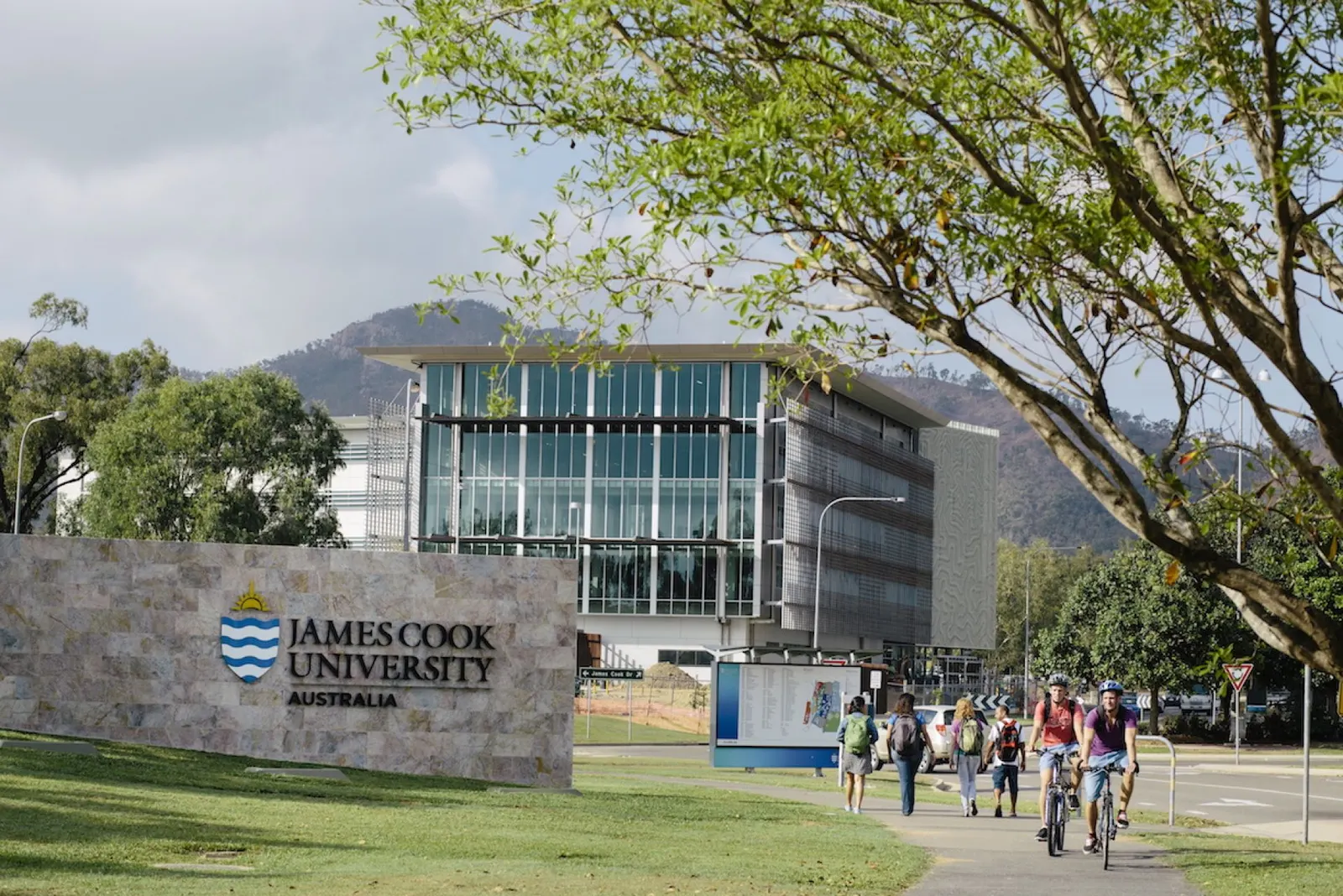
JCU is not a compact city campus. It runs major campuses in Townsville and Cairns, a city campus in Brisbane and a campus in Singapore, with smaller study centres across northern Queensland serving roughly 20,000 students. The Townsville campus at Douglas, known as Bebegu Yumba or 'place of learning' in the Birri-Gubba language, covers 386 hectares of bush and parkland, and the role is explicitly responsible for the built and natural environment.
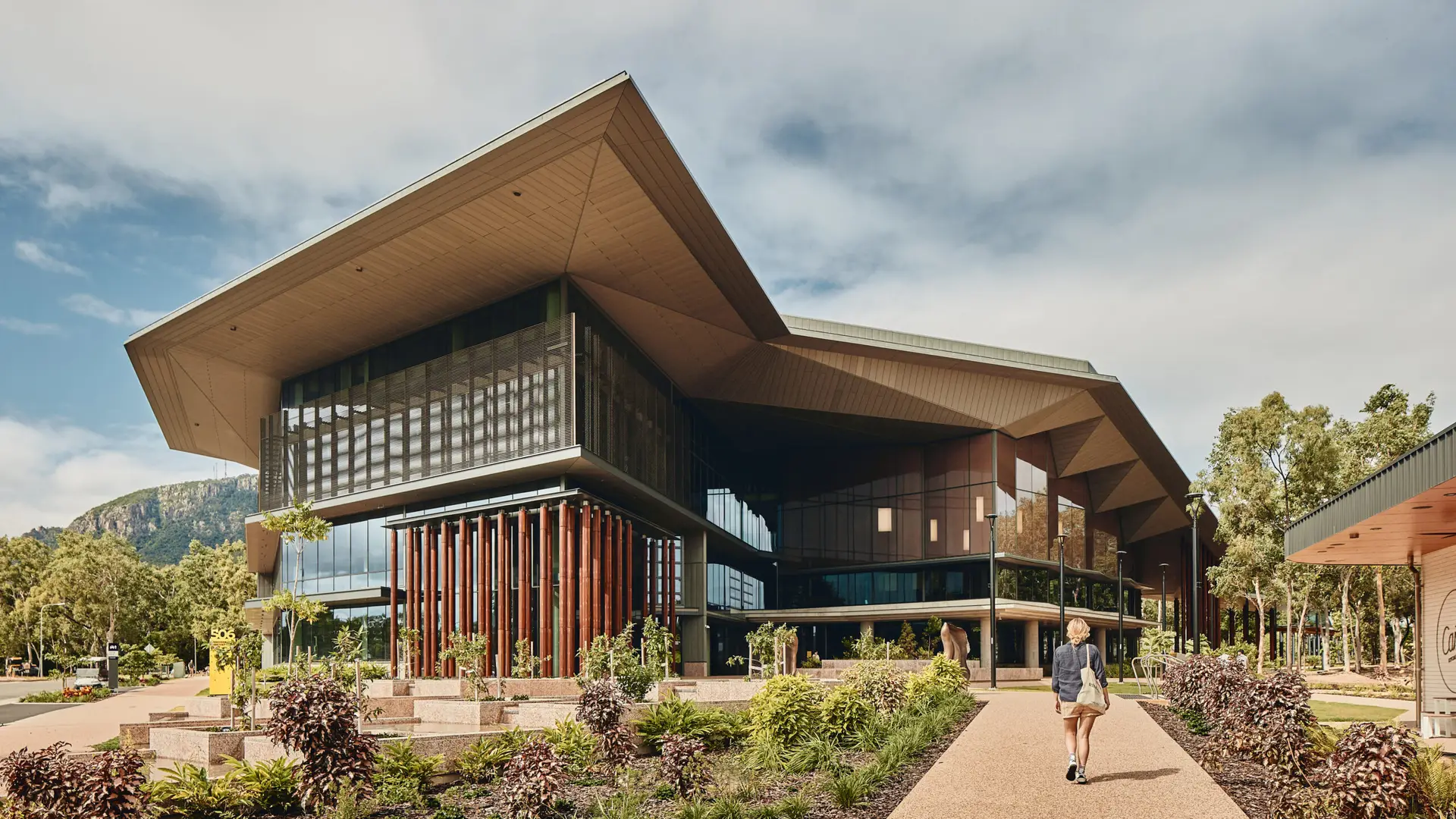
The portfolio is why the word 'diverse' appears in the advertisement and actually means something this time. Recent projects show the spread. The Engineering and Innovation Place, a $100 million, 9,400 square metre building, opened in 2024 with 23 laboratories and a cyclone-resistant glulam timber facade the university describes as a world first for the tropics. Burralga Yumba, a $53 million student residence with more than 400 rooms, opened in 2022. Capital projects at JCU have totalled more than $500 million over the past decade.
Tropical North Queensland is where the maintenance strategy earns its keep. Cyclone season runs from November to April, and the wet season brings humidity and mould. The 2019 monsoon flood put whole suburbs of Townsville under water. The campus was built with these conditions in mind, but resilience is a recurring operating cost rather than a one-off design feature. A planner arriving from a southern capital learns quickly that corrosion, heat load, humidity and storm risk change the arithmetic of every renewal decision.
What the role does from week to week
The advertisement breaks the work into four strands: developing and implementing the optimised maintenance program, managing the Strategic Asset Management Framework and asset lifecycles, managing safety, financial, operational and reputational risk within Work Health and Safety law and Australian Standards, and keeping technical, operational and corporate stakeholders informed. Underneath that sits the real output: condition-based and risk-based investment priorities that survive a budget round.
The data question is where the job is won or lost. JCU has already invested in a campus asset decision-support system covering chilled water, wastewater, drainage, electrical networks, roads and parking, because the university found it was relying too heavily on institutional knowledge held in people's heads. The planner inherits that system and has to trust its numbers enough to spend money on them. A condition grade nobody believes is worse than no grade at all, because it produces arguments instead of decisions.
Compliance is the floor of the role, not the ceiling. Planned maintenance programs have to align with Australian Standards and statutory requirements, and the planner is the person accountable for the gaps that get found in an audit. That part of the work is unglamorous and unforgiving, and it is the part that protects the university from the kind of failure that makes the evening news.
What JCU is screening for
The person specification is deliberately broad on discipline and specific on judgment. JCU wants someone with qualifications or demonstrated experience in asset management, engineering, facilities management or a related discipline, and ideally someone progressing toward a postgraduate qualification. What matters more than the letters is the ability to turn condition data, technical information, financial insight and utilisation trends into a defensible maintenance program, and then to carry that program through conversations with academics, contractors, safety officers and finance staff who do not share the same vocabulary.
Leadership here is not a title. It is the skill of making a technical recommendation understandable to a dean who wants a new laboratory and a finance director who wants a lower operating budget, without losing the work health and safety team that needs compliance this week. The advertisement asks for someone who can 'balance competing priorities', which is the polite description of that negotiation.
Experience in a 'large and complex organisational setting' is listed for a reason. A university is a federation of faculties with their own claims on space and money, and an asset planner who has only ever worked where the org chart is tidy will find the decision-making unfamiliar. The successful candidate will likely have sat through a meeting where the best technical answer lost to the better-political one and still come back the next day.
Pay, conditions and the cost of living here
The salary is competitive for the sector. HEWL 8 at JCU spans $111,960 to $128,567, which sits alongside similar professional roles at the University of Queensland and Australian Catholic University, both of which pay HEW 8 staff in the low $110,000s to around $130,000. The 17 per cent employer superannuation through UniSuper matters more than it sounds: it is roughly five percentage points above the compulsory superannuation guarantee, and it compounds.
The leave package is generous, and the extras stack up:
- Five weeks of annual recreation leave plus leave loading
- 15 days of paid sick and carer's leave each year
- Up to six months of paid parental leave
- Flexible working and staff study assistance with paid study leave
- Fitness Passport, plus on-site childcare and medical services at Townsville
None of it is unusual in the university sector, but it is a meaningful step above what many private asset-management employers offer.
Then there is the question of whether Townsville itself is a benefit or a cost, and the honest answer is both. The city averages around 300 days of sunshine a year. PropTrack figures reported in mid-2026 put the median dwelling value near $638,000 against more than $1.7 million in Brisbane, and rent and childcare run well below the capitals. The campus sits 13 kilometres from the centre in Douglas, beside Townsville University Hospital, with Magnetic Island a short ferry ride offshore.
The other side of the ledger is insurance and climate. Cyclone season runs from November to April, and the 2019 monsoon flood damaged thousands of homes. Insurers apply cyclone and flood loadings across North Queensland that southern buyers never see. Anyone moving for this job should price insurance for the specific suburb before accepting an offer, because two houses a few kilometres apart can carry very different premiums depending on flood mapping.
Applying, and what the cover letter is for
Applications close on 5 November 2026. You complete an online application form and upload a current resume. The decisive document is the cover letter, which JCU asks you to use to set out your relevant experience against the key requirements of the role. The cover letter is not a formality here: the selection panel uses it to test whether you can connect your own asset-planning record to a specific, risk-informed program, so generic language about passion for asset management will read as an absence of evidence.
Enquiries about the role go to Daniel Nixon at daniel.nixon@jcu.edu.au. The full advertisement and the apply button are on the JCU careers site, and the position is also listed with a summary of the requirements on AcademicJobs.com.
Because the role is continuing rather than fixed-term, the selection panel will be weighing whether you can grow with the institution as well as whether you can do the first year's work. Evidence of delivering a maintenance program through a full budget cycle, or of improving asset data quality, will count for more than a long list of projects watched from a distance.
The question in year two
The capital side of JCU's ledger is healthy for now. The Engineering and Innovation Place is open and Burralga Yumba is full. The Townsville Campus Renewal program is funded through a schedule that runs to the end of the decade. The pressure will come from the other side of the ledger. JCU's own Natural Assets Management Plan, published in 2021, said current funding for natural asset management was inadequate to meet its objectives, with compliance as the floor rather than the ambition.
A Strategic Asset Planner does not fail by writing a bad framework. Frameworks are the easy part; most read the same and say the same things about risk and whole-of-life cost. The role succeeds or fails on whether its renewal priorities survive contact with a budget round in which a new building carries a donor's name and a roof replacement carries nobody's. That is the question the successful applicant will face in year two: whether a sound framework can still be defended when the money is contested.
- higher-education-careers
- james-cook-university
- townsville-jobs
- facilities-management
- estate-management