
At a glance
Cell Press has commissioned an independent review after Cancer Cell editor Steve Mao was accused of soliciting bribes from Chinese authors. Here is the timeline, the evidence so far, and the structural problem behind the allegation.

The most quietly damaging detail in the Cell Press bribery affair is not the alleged price tag. It is that a single editor at a journal with an impact factor of 56.1 can decide, almost alone, which papers ever reach a reviewer. Peking University's Rao Yi put that concentration of power on public display in October 2026, and the publisher has now handed the matter to an external investigator. The number everyone keeps repeating — 2 million yuan, about US$299,000 — may turn out to be the least important part of the story.
On 12 October, Rao Yi, a tenured chair professor at Peking University and former president of Capital Medical University, posted an open letter on his WeChat account, Rao Yi Science. He said Chinese scientists had told him that editors at several international journals were demanding personal payments in exchange for helping authors publish. One account cut through: a clinician had met a journal editor face to face and was quoted an initial payment of 2 million yuan, payable to the editor personally, not to the journal, with further sums possibly required later. Rao published an English-language email exchange with the accused editor. The editor called the claim completely false and baseless, demanded an immediate retraction, and said he had preserved evidence and reserved all rights. Rao replied that he would not retract and challenged the editor to sue.
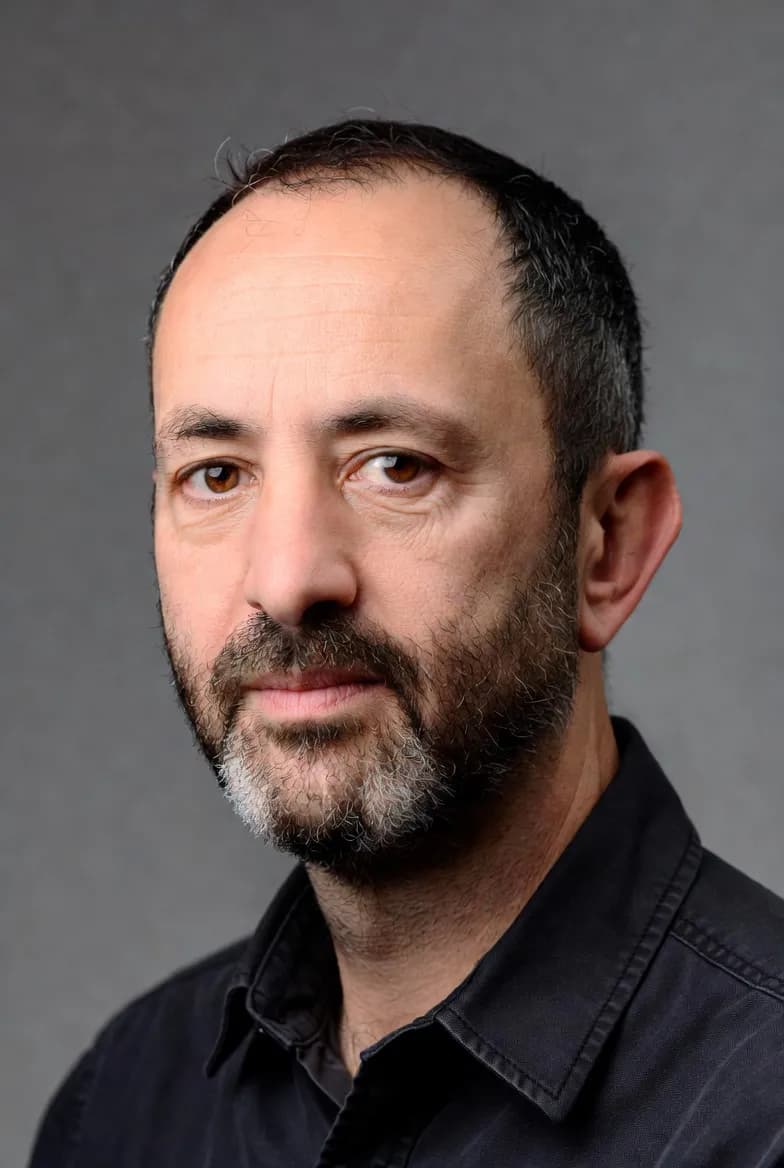
The next day, 13 October, Rao named the editor: Steve Mao, also known as Mao Yuntao, editor-in-chief of Cancer Cell. Rao urged Chinese scientists to stop submitting to and reviewing for the journal until Steve Mao resigns or is dismissed. He went further, telling funding bodies and evaluation committees that Cancer Cell papers should not be treated as automatically strong simply because of the journal's citation metrics, and that some Chinese papers published under Mao's editorship could not be assumed clean.
Cell Press responded in stages. On 14 October, a spokesperson told China Newsweek that the publisher took the integrity of its editorial process very seriously, was reviewing the matter under established procedures, and was contacting Rao to request any supporting evidence he held. By 15 October the position had not shifted: the review was continuing. Then, at 10pm Beijing time on 16 October, the company posted a statement on its official WeChat account saying it had initiated the relevant procedures and commissioned an external, independent third party to conduct a comprehensive investigation. While the investigation runs, the publisher said, it will not comment further.
The first observable consequence was quieter than any statement. The Westlake-Cell Press Tumor Biology Conference, scheduled for 6 to 8 November at Westlake University's Yungu campus in Hangzhou, had listed Mao on its six-member academic committee alongside Shi Yigong, Yu Hongtao, Guan Kunliang, Tan Jiaying and Xiao Jiani. By the morning of 17 October, Mao's name had disappeared from both the committee list and a planned Meet the Editors session. His seat went to Peter T. Lee, Cell Press's vice president of editorial strategy and innovation, who also edits Immunity. The conference page carried no explanation, only a note that organisational arrangements had been updated. It took five days from the first post to the removal of the name.
How Much Power Does One Editor Actually Hold?
More than most outsiders assume. At the Cell, Nature and Science family of journals, editors are full-time professional staff rather than working scientists serving part-time. A former U.S. biology researcher and long-time reviewer, Zhang Chenghao, told China Newsweek that the handling editor holds enormous sway at the first filter, where papers are either advanced for external review or rejected outright. A U.S.-based researcher who has published multiple times in Cancer Cell told the magazine that roughly nine in ten submissions to such journals are rejected before they ever reach a reviewer. The editor, in other words, decides whose work gets a real hearing.
Who reviews a paper is also the editor's call. The same researcher estimated that an editor's influence on a manuscript's fate is at least eighty percent, once screening, reviewer selection and the final call are rolled together. Ian Tannock, professor emeritus of medical oncology at the University of Toronto and the Princess Margaret Cancer Centre, wrote to China Newsweek that at high-impact journals, papers with positive reviews still go to a committee chaired by the editor-in-chief, who decides acceptance or rejection.
That is the structural fact hiding inside the scandal. Publishers protect editorial independence partly by refusing to second-guess these calls. A veteran publisher quoted by China Newsweek, Zhou Ning, said management generally does not intervene in editorial decisions out of respect for that independence. The result is a system that runs on trust. When trust in one editor is questioned, the usual checks are thin. An editor-in-chief can be disciplined after a proven failure or ethical breach, but the mechanisms that would catch private, off-platform solicitations early are largely absent.
A five-day timeline
- 12 October 2026: Rao Yi publishes an open letter describing the alleged 2 million yuan solicitation and the editor's emailed denial.
- 13 October 2026: Rao names Steve Mao and calls for a boycott of Cancer Cell submissions and reviews.
- 14 October 2026: A Cell Press spokesperson tells China Newsweek the publisher is reviewing the matter and seeking evidence from Rao.
- 16 October 2026: Cell Press announces it has commissioned an external, independent third party to conduct a full investigation.
- 17 October 2026: The Westlake University conference removes Mao from its academic committee and Meet the Editors session, replacing him with Peter T. Lee.
The man at the centre
Steve Mao graduated from Peking University's School of Life Sciences in 2002, earned a PhD in cell biology from the University of Texas Southwestern Medical Center, and did postdoctoral work at Cold Spring Harbor Laboratory and Harvard University. He joined Cell Press in 2012 as a senior editor at Cell, moved to Science as a senior editor in 2017, and became Cancer Cell's editor-in-chief in February 2020. Since 2022 he has also been a Cell Press publishing director, and since August 2025 he has directed editorial and strategic initiatives for China and the Asia-Pacific region. He oversees eight titles, including Cancer Cell, Cell Metabolism, Cell Stem Cell, Developmental Cell, Immunity, Med, Molecular Cell and Neuron, according to Chinese media reports. He has not responded to requests for comment from the South China Morning Post or China Newsweek.
That regional portfolio is precisely why the accusation lands so hard. A person who both runs a top oncology journal and shapes the publisher's China strategy sits at a junction the wider scientific community rarely scrutinises. Zaobao reported that Rao framed his boycott as a matter of collective Chinese scientific interest, arguing that paying editors damages the credibility of the country's research output as a whole.
Here's the catch
The allegation, however explosive, is currently a claim made on a WeChat public account. It rests on secondhand accounts, one alleged face-to-face meeting and an email in which the accused editor denied everything. The South China Morning Post reported that it could not independently verify Rao's claims. No payment record has been published. Cell Press itself is asking Rao for whatever supporting evidence he possesses, which suggests the publisher had not seen a documentary record when it announced the review.
An anonymous veteran of international academic publishing told the South China Morning Post that spending hundreds of thousands or even millions of yuan to open a path to publication was a tacitly understood practice in top medical journals. The logic, as the insider described it, is cold: a direct submission is likely to be rejected in the first round, while an established relationship can buy more chances and specific revision guidance. Some journals have disciplined editors internally over such transactions, the source said, but those episodes rarely leave the circle. That is a mechanism, not proof of this transaction.
Hype versus reality
- Hype: Cancer Cell's Chinese output is collectively compromised. Reality: The published evidence does not support that. Between 1 January 2020 and 13 October 2026, Chinese institutions were core corresponding units on 149 Cancer Cell papers, according to iNature. A cloud over the editor is not proof of misconduct by any author.
- Hype: This is a China problem. Reality: The editorial leverage is global. What varies is the incentive. A single paper in this journal can decide research funding, a professorial appointment, clinical programme support and the career trajectory that follows. The publishing insider told the SCMP the outlay is essentially an investment.
- Hype: Announcing an investigation equals accountability. Reality: Independent reviews in academic publishing routinely disappear into confidential findings. The test is whether Cell Press publishes an outcome and whether the named editor keeps handling manuscripts while the probe is running.
What the numbers show, tentatively
China Newsweek reported that Chinese-led papers in Cancer Cell climbed from about five in 2019 to thirty-seven in 2025. That spike is already circulating as suspicion. It also coincides with an acknowledged editorial change: Mao wrote in an April 2025 editorial that the journal had deliberately widened its scope beyond cancer biology to translational research and clinical oncology, a shift that plausibly attracts more clinician-led submissions from China. Both explanations can operate side by side, which is exactly why a sober review matters. The correlation alone should not be converted into a verdict, and China's broader effort to curb impact-factor worship, covered in our piece on research evaluation reform in China, is aimed at reducing the reward structure that makes such payments tempting in the first place.
The publishing industry has recent experience with bad actors hiding inside legitimate workflows. The Wiley-Hindawi mass retractions, which we detailed in our report on the paper-mill probe, showed how long compromised pipelines can run before they are exposed. The common thread is not nationality. It is opacity: quiet power, concentrated at the point of editorial discretion, with too little external visibility into who is deciding what.
What happens next
Cell Press is seeking evidence from Rao Yi. If the allegations are substantiated, China Newsweek reported, the editor would be dismissed. No outcome has been announced yet. The removal from the Westlake conference shows that at least one partner institution conducted a risk assessment and decided that the name had become heavier than the reputation it once carried. Mao, for his part, has stayed silent outside the emailed denial Rao published.
The harder question is what a not-proven finding looks like. The publisher could clear him quietly and restart trust on the same foundations. Or it could use the moment to publish internal rules on editor conduct, limit individual discretion at the initial screening stage, and disclose outcomes of integrity reviews. The cheap fix is a statement. The expensive fix is changing how much solitary power one desk is allowed to hold.
Zhang Chenghao put the standard plainly when he spoke to China Newsweek: top journals should have zero tolerance for editor solicitation and bribery. Then he added the condition that makes everyone uncomfortable. It only works, he said, when there is solid evidence.

- academic-publishing
- research-integrity
- peer-review
- cell-press
- bribery-investigation