A department head I've advised for six years sent me a one-line message the morning the advertisement appeared: "Twenty years in, is this mine to apply for?" She has run a business school in the Northern Emirates, closed two accreditation findings and manages a faculty of forty across four nationalities. What she has never done is sit in a president's chair, and the advert, read quickly, seems to want someone who already has.
SBS Swiss Business School's Ras Al Khaimah campus is recruiting a President. The listing was published on 16 November 2026, closes on 16 December 2026, and sits in the executive category, full time, at the campus address in Al Jazeera Al Hamra Industrial inside the RAKEZ Academic Zone. A thirty-day window that runs through a holiday season is not an accident of scheduling; it tells you the board has a shortlist in mind and is using the open advert to test it.
Read the person specification properly, though, and something different emerges. This is not a fundraising presidency or a thought-leadership presidency. Every performance priority in the document is a compliance priority.
A presidency written around a compliance calendar
The successful candidate will oversee "applicable UAE licensing, quality assurance and accreditation obligations, including engagements with MoHESR, CAA and relevant Ras Al Khaimah authorities." The priorities listed underneath are regulatory readiness, timely compliance reporting, effective closure of findings, documented quality improvement and evidence of measurable impact. Academic leadership appears too — programme quality, faculty development, assessment standards, student progression — but it is framed as something to be evidenced rather than asserted.
That framing is the job. The UAE's Federal Decree-Law No. 31 of 2025 on Higher Education and Scientific Research took effect on 1 January 2026 and, for the first time, brought free-zone institutions inside a single national framework. Institutions in free zones must now hold local authorisation alongside federal licensure and programme accreditation. Existing providers were given a year from commencement to correct their status, with the possibility of an extension. The penalties attached to operating or advertising without accreditation run to a fine of up to AED 10 million, imprisonment, or both.
The implementing framework, approved in 2026, sets out a sequential pathway rather than two parallel licences: the free-zone authority issues a local permit, and the ministry then issues the institutional licence without repeating the process or charging duplicate fees. As University World News reported when the law was announced, the ministry also gained powers to classify institutions and publish the results — which means a president's compliance record becomes a public artefact, not an internal one.
What would you want to see in a file that will be read by a regulator, a free-zone authority and a Zurich parent campus at the same time? That question, more than any vision statement, is the one this search is really asking.
What the campus actually is
SBS Swiss Business School was founded in 1998 and incorporated in the Canton of Zurich. Its programmes carry professional accreditation through the British Accreditation Council, ACBSP and IACBE, along with EDUQUA certification, and the Swiss Accreditation Council has accredited it as a university of applied sciences institute. In the 2026 CEO Magazine global rankings its Executive MBA placed fourth worldwide and its Online MBA fifth, with the school again listed as a Tier One provider.
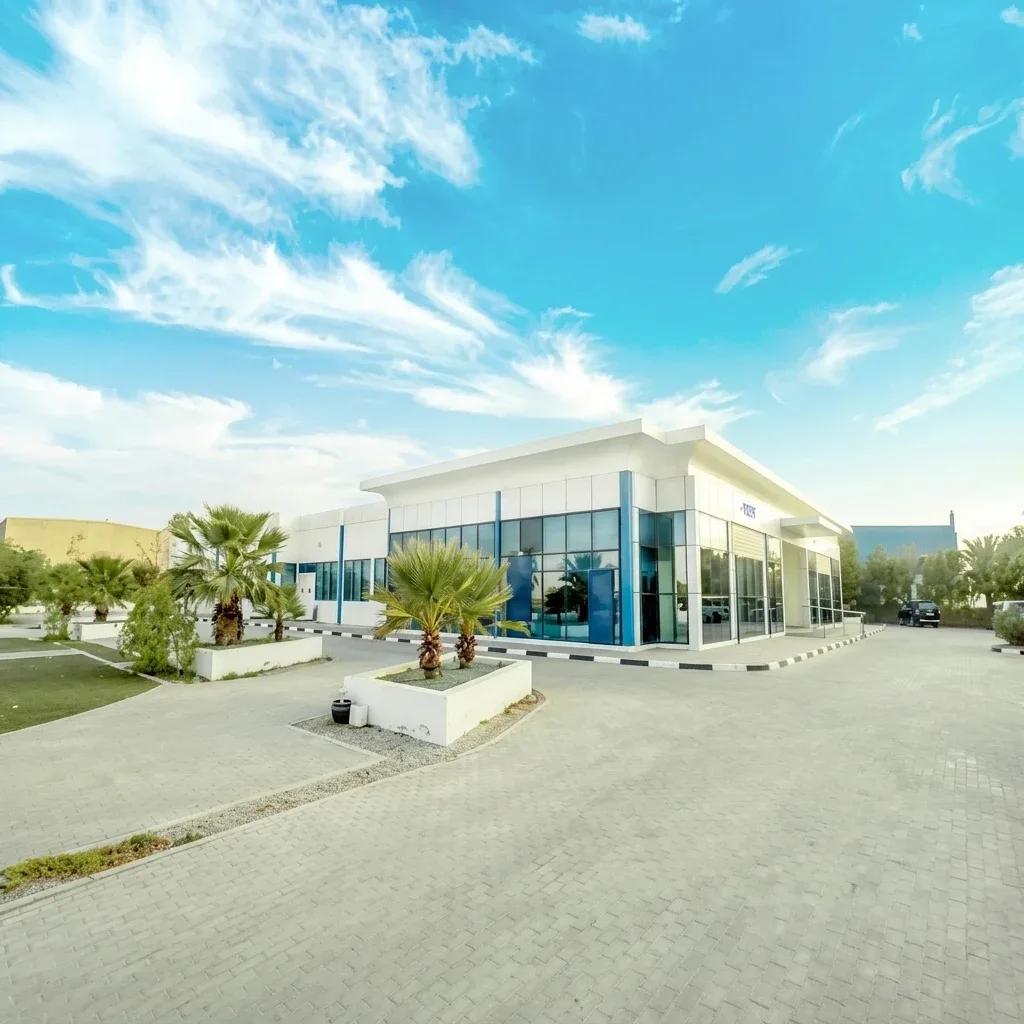
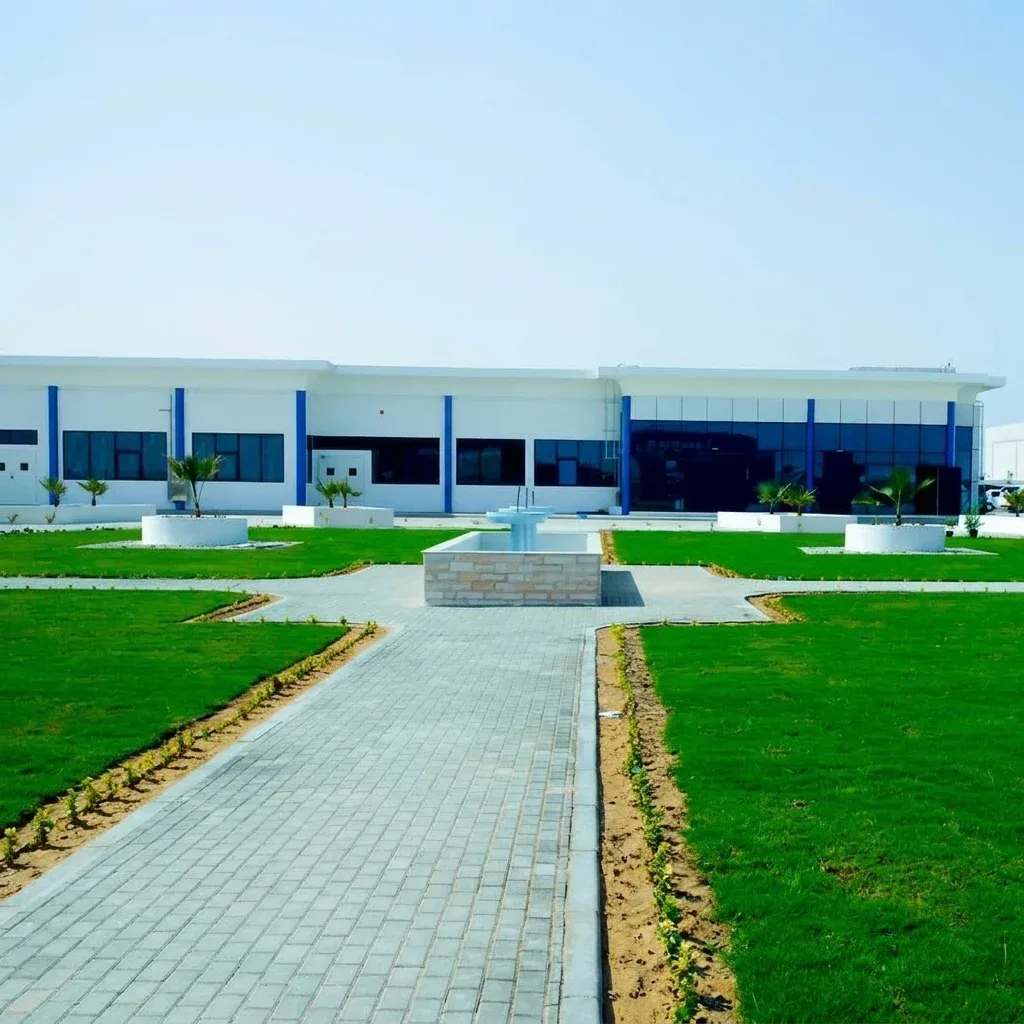
The Ras Al Khaimah campus is a branch operation, licensed by RAKEZ under licence 52000043 and delivering the Zurich curriculum at undergraduate and postgraduate level, including a doctorate in business administration. It is governed by a five-member board of directors chaired by Dr. Hemant Kumar, founder of the campus and chairman of ATMS Education Group, with Dr. Bert Wolfs, a founding member of SBS in Zurich and its academic dean, also on the board. Under the institution's own governance policy, the board sets strategy and the academic leadership executes it.
One detail matters more than the rest. The campus's public accreditation page states plainly that it is "currently undergoing the institutional licensure and programme accreditation review process" with MoHESR and the Commission for Academic Accreditation, and that no representation is made that CAA licensure or programme accreditation has been granted at this stage. A new president inherits that sentence. Whether it becomes a footnote or a liability in the next eighteen months is, in practical terms, the job description. The RAKEZ Academic Zone lists the campus alongside the emirate's other international providers, and in December 2025 the zone recognised six branch campuses, SBS among them, for completing its compliance assessment.
Reading the person specification as evidence
The mandatory requirements are unusually explicit. An earned PhD, DBA or equivalent doctorate from a recognised institution, with the line "PhD equivalency is mandatory" attached. A minimum of twenty years combining higher education teaching with academic administration, including substantial senior leadership. Demonstrated success as a president, provost, vice president, dean or comparable executive. Practical experience of quality assurance, institutional effectiveness, governance, accreditation and strategic planning.
Twenty years of combined teaching and administration is a narrower filter than it looks. Plenty of strong candidates have spent two decades in administration without a sustained teaching record, and the wording rules them out at the screening stage rather than at interview.
The preferences are where the real signalling sits. A proven record in the UAE. Direct experience of UAE licensing, accreditation and regulatory inspection, with knowledge of MoHESR and CAA processes. Fluency in Arabic and English, with Arabic-speaking candidates "strongly preferred." Established relationships across UAE higher education. Read together, those lines describe someone who can walk into a regulator's office in Ras Al Khaimah or Abu Dhabi and be recognised — an access requirement as much as a skills one.
For a candidate outside the Gulf, that is not a closed door, but it is a door that has to be opened with evidence. Name the accreditation cycles you have led, the findings you closed and the year you closed them, the teach-out plan you wrote, the programme review that changed a curriculum. "Strong track record in quality assurance" in an application convinces nobody; a two-line description of a specific review outcome does.
The file a board will actually read
Applicants are asked for a current CV, copies of academic qualifications, a brief statement of institutional leadership vision, evidence of accreditation and institutional effectiveness experience, details of relevant UAE leadership achievements, and referees. Six items, none of them optional in practice.
Do the arithmetic on attention. A shortlisting committee reading a thirty-day advert will give each complete file something like a quarter of an hour. The vision statement is the only place where your judgement shows through, so keep it to two pages and make it answer three questions in order: where is this campus now in its regulatory and academic position, what would you sequence over the first twelve months, and how would the board know it had worked. If the document could be submitted to any business school anywhere, it fails.
On the CV, the same discipline applies. Structure it so a reader who is scanning for regulatory competence finds it in the top third. Our guide to writing a winning academic CV covers the mechanics, but the principle for an executive application is simpler: lead with outcomes and dates, not responsibilities.
Referees deserve a paragraph of their own. Choose people who can speak to a specific accreditation episode from the inside — the registrar who ran the evidence file with you, the external reviewer who saw the corrective action plan through. A former vice-chancellor who knew you socially is worth less than a quality assurance director who watched you work.
A hiring market with two regulators watching
The UAE's Commission for Academic Accreditation listed 103 active higher education institutions at the start of 2026. The country hosts 39 international branch campuses, second only to China, according to the Cross-Border Education Research Team at the State University of New York at Albany. Ras Al Khaimah alone carries a CAA-licensed group including the American University of Ras Al Khaimah and RAK Medical and Health Sciences University, and a RAKEZ group that includes campuses of the University of Greater Manchester, University of West London, University of Stirling, Bath Spa University and Northwood University.
It is also expanding. The University of Greater Manchester opened a purpose-built campus in Sheikh Khalifa City in 2026 with capacity for 1,750 students in its first phase, after eighteen years of operating from RAKEZ. ATMS Education Group, whose chairman also chairs the SBS RAK board, signed a lease for 20,000 square metres in Al Hamra for a University of Wolverhampton campus, backed by a stated AED 100 million investment and designed for more than 600 students.
Expansion of that kind raises the value of a leader who can hold a licence and a reputation simultaneously. It also raises the cost of failure. In December 2025 the Ministry of Higher Education and Scientific Research revoked recognition of Midocean University after inspections found unaccredited programmes and record discrepancies — a reminder that the UAE's tolerance for regulatory drift has narrowed sharply. Recruiters in this market are no longer filling academic figurehead roles. They are hiring for regulated executive function, and the SBS specification reads like a document written by people who know the difference.
Applications go through the listing on AcademicJobs.com, and the school's own faculty and careers page carries the institutional context. Early submission matters here: with a 16 December close, referees need approaching in the first week, not the last.
One step this month
If you are the person I described at the start of this piece — deep operational experience, a clean compliance record, no presidency yet — resist the urge to decide whether you are qualified. You cannot answer that from the outside, and the board's own view of "comparable" is broader than the advert's examples suggest.
Write down, in a single page for your own eyes only, the four moments in the last decade when an institution's regulatory position improved because of something you did, with dates and named outcomes. Then read the SBS priorities list against that page. Where the page is thin, you have found the honest gap. Where it's strong, you have found the argument for applying — and the raw material for a vision statement that could only have been written by you.