

At a glance
Bond University is hiring an Accessibility & Inclusion Manager to deliver its Disability Inclusion and Accessibility Plan. Salary, criteria and closing date.
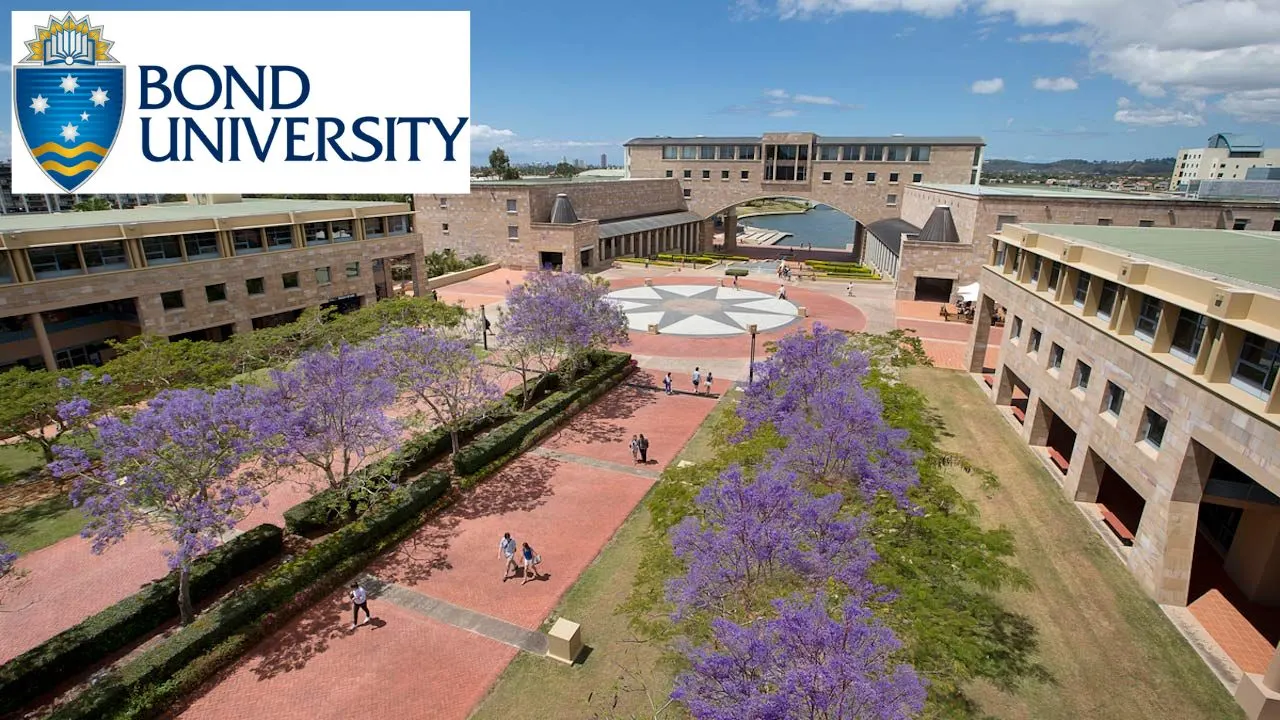
Accessibility & Inclusion Manager jobs rarely generate much heat. Bond University's current opening deserves attention for two reasons: it closes at 11:59pm on Monday 9 November 2026, and the role now carries a level of responsibility that a decade ago would have sat with a single disability officer and a shared inbox.
The advertised salary commences at $116,195 per annum plus 12% superannuation. It's a full-time, continuing appointment on the Gold Coast campus at Robina, and the successful applicant will lead the university's Accessibility & Inclusion function, including a direct caseload and the implementation of its Disability Inclusion and Accessibility Plan (DIAP).
The numbers behind the role have shifted. Across Australia, 13.5% of domestic undergraduates — 98,061 students — disclosed a disability in 2024, up from 12.7% in 2023. Just under half of those students list a mental health condition, and neurological conditions, which now include autism and ADHD, more than doubled between 2021 and 2024. That changes what a campus accessibility service does all day.
What the Manager Will Actually Do
The position description has two halves that tend to attract different candidates. The first is strategic: leading the Accessibility & Inclusion Advisor and coordinating the DIAP, then building capability so faculties and professional service areas own inclusive practice themselves rather than bouncing every request to a central desk.
The second half keeps the job honest. The Manager carries a caseload and handles complex case management and admission reviews, staying close enough to individual students that the university-wide strategy doesn't drift from what people actually need. Bond's own policy frames this through Learning Access Plans (LAPs) — personalised documents listing approved reasonable adjustments, developed between a student and the accessibility team, then endorsed by their faculty before being shared with educators.
A colleague — call her Ms R — runs an accessibility inbox at another south-east Queensland campus. When she started, most of her week went to exam adjustments and assistive-technology bookings. Now a large share of her appointments open with a student who registered late in the semester and whose referral mentions anxiety or ADHD. The caseload didn't double because students changed. The categories they tick on an enrolment form did, and the reporting finally catches up years later.
That's the base rate for this job: disclosure is climbing faster than support staffing, and the work is moving out of pure administration and into judgment — what reasonable means in a faculty with placement-heavy degrees, and where inherent requirements end. Those conversations take longer than the paperwork.
The Legal Frame Isn't Optional
Bond, like every Australian education provider, operates inside the Disability Discrimination Act 1992 and the Disability Standards for Education 2005. The Standards set out an active duty: consult the student about how the disability affects their study, then decide whether an adjustment is necessary and make a reasonable one unless doing so would impose unjustifiable hardship.
Two phrases do most of the work in disputes. A reasonable adjustment is a change to the learning environment or to teaching and assessment that lets a student participate on the same basis as peers without changing the qualification's standards. Inherent requirements are the core abilities a course can't compromise without changing what the degree certifies — flight checks for an aviation program, infection control in nursing.
The 2023 Disability Royal Commission pushed further. Its final report — 222 recommendations in all — argued for positive duties and co-design, and it placed the workforce, including educators and disability practitioners, at the centre of reform. Universities have spent the years since deciding how much of that to absorb voluntarily.
There's also money attached now, on a scale that changes recruitment. The Universities Accord made students with disability a defined equity group, and the government has quadrupled the Disability Support Fund while confirming Universal Design for Learning (UDL) as an allowable expenditure under the Higher Education Disability Support Program. UDL, in plain terms, means designing courses so a wide range of learners can use them from the outset, reducing the pile of individual retrofits later. ADCET runs a free four-module UDL program for tertiary staff on exactly this point.
One Hire in a Wider Hiring Wave
Bond isn't alone in upgrading this function. The University of Queensland advertised a Manager, Accessibility and Welfare at HEW Level 8, with a base range of $120,317 to $134,892 plus 17% superannuation. Griffith University raised the stakes with a Manager, Student Disability and Accessibility at HEW Level 9, paying $137,165 to $142,070 plus 17% superannuation, and stated that lived experience of disability was highly valued.
The salary comparison across south-east Queensland right now looks like this:
| Institution | Role | Base salary | Superannuation |
|---|---|---|---|
| Bond University | Accessibility & Inclusion Manager | from $116,195 | 12% |
| The University of Queensland | Manager, Accessibility and Welfare (HEW 8) | $120,317 – $134,892 | 17% |
| Griffith University | Manager, Student Disability and Accessibility (HEW 9) | $137,165 – $142,070 | 17% |
Why the wave? The underlying measurement system disagrees with itself about how many disabled students there are. One in four Australian school students is counted as having a disability under the Nationally Consistent Collection of Data, while at university the figure sits near one in eight — 12.7% at Table A universities in 2024. That gap says more about disclosure incentives and definitions than about demography, and each new cohort arriving from school widens it a little further. Across universities, disclosure ranges from 5.1% to 23.3% of the undergraduate cohort, with mental health conditions showing the widest spread.
Employment outcomes explain why institutions keep spending on this work. Australians with disability aged 15 to 64 participate in the labour force at about 53.4%, against 84.1% for people without disability — a gap that has barely moved in two decades. A degree narrows it: undergraduates with disability secure full-time roles at 67%, compared with 73% for their peers. Universities are, in effect, the most reliable ladder available.
What Bond Is Offering — and What It Isn't
Bond is Australia's first private, not-for-profit university, and that status shows up in the pay packet. Twelve per cent superannuation is below the 17% at UQ and Griffith, and the $116,195 starting salary sits modestly below Brisbane's public-university equivalents. Candidates weighing the move should read the full package, not just the headline.
Bond's case rests on the conditions: a 36.75-hour standard week, free staff parking, flexible and work-from-home arrangements, up to 18 or 26 weeks of paid parental leave where eligible, salary packaging, 17.5% leave loading, study assistance for staff and dependants, an onsite medical centre, counselling services and a staff sports centre with gym and pool. Those items land differently for a working parent on the Gold Coast than for an early-career professional in inner Brisbane.
There's one fact in the fine print worth knowing before you apply. Bond's published Mission-Based Compact with the Commonwealth states that the university does not receive government funding specifically to support students with disability. That's unusual in the sector and changes what the role represents: funded from Bond's own budget, the appointment signals institutional priority rather than a compliance line item.
How to Put In a Competitive Application
The application goes through Bond's online portal and needs a current resume plus a cover letter that addresses the selection criteria, not a generic two-pager. The criteria ask for disability and accessibility legislation, Universal Design for Learning, reasonable adjustments, inherent requirements, placements, complaints and appeals, plus neuroaffirming practice and trauma-informed approaches.
That last pairing is doing real work. Neuroaffirming practice means working with a student's neurology rather than against it — for an autistic or ADHD student, that can look like choices about disclosure and communication instead of a rigid accommodation script. Trauma-informed approaches assume interactions around evidence and refusal can land differently for students who have spent years being disbelieved.
If your experience sits mostly inside one institution, the panel can't see your best evidence. A CV built around achievements rather than duties reads better at this level; the academic CV guide on this site has a structure that transfers cleanly to professional appointments.
Enquiries go to Stephanie Cooper, Head of Service for Student Counselling, Health & Wellbeing, and the listing is on Bond's jobs site. Applications close at 11:59pm on Monday 9 November 2026. Give the selection criteria a full day each — the strongest cover letters treat every heading as a short case study with a number attached.
What This Means for Your University
If you're sitting in another institution reading this, the useful move isn't to copy Bond's job title. It's to compare your disclosure rate against the 13.5% sector figure. Institutions in the same city routinely vary by five to eight percentage points, and a low number almost always reflects a reporting and trust problem rather than a student population with fewer disabilities. Fix the front door first: make disclosure feel safe, explain what a Learning Access Plan does, and stop burying the Week 2 registration rule in a handbook students never open.
The other benchmark is time-to-plan. When a student registers, how long until an endorsed plan reaches their educators? Bond's advertised deadline implies a discipline — register by the end of Week 2, adjustments in place for the semester. Where a campus can't meet that because the advisor's calendar is full, the constraint is staffing, not policy, and the mathematics of 13.5% and rising should tell a deputy vice-chancellor what to do next.
The next step depends on who you are. If you're applying, download the position description now and mark up each selection criterion with one recent example from your own case files before you write a word of the cover letter. If you're not applying, pull your university's latest disclosure rate and time-to-plan figure, and take both to the next equity committee meeting with the 13.5% sector average on the table.
- university-jobs
- higher-education-australia
- bond-university
- disability-inclusion
- diversity-and-inclusion