

At a glance
Bond University is hiring an Events Coordinator on a continuing appointment. Dr. Elena Ramirez breaks down the salary, selection criteria, application timeline and what the Brisbane 2032 pipeline means for the role.

The Events Coordinator position advertised at Bond University looks, on a quick scroll, like standard university professional staff hiring: full-time, continuing, salary stated, selection criteria listed, closing date circled. Read closer and the advertisement is doing something more specific. It is hiring the person who will run the events that drive student recruitment and donor engagement through the back half of this decade, on a campus 20 minutes from the venues that will host the Brisbane 2032 Olympic and Paralympic Games. That timing is not decorative. It changes what the successful applicant will actually manage, and what the role will be worth on a CV by 2030.
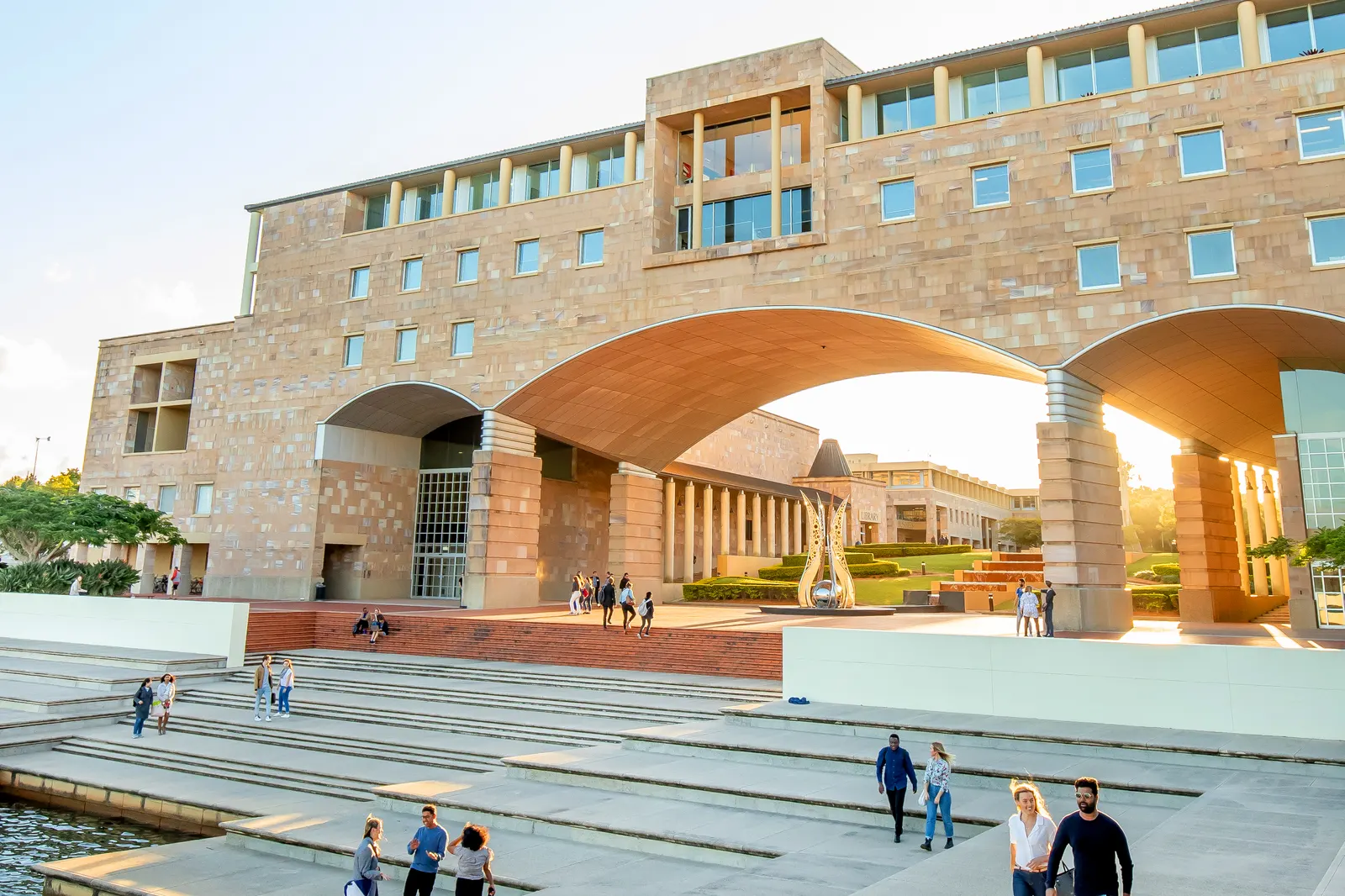
As Australia's first private, not-for-profit university, Bond operates on a trimester calendar from its Robina campus on the Gold Coast. The university runs three semesters a year, which compresses the usual academic year into a tighter cycle of open days, information evenings, graduation ceremonies and executive education functions. There is no long December-to-February planning lull. The Events Coordinator steps into a calendar that is always mid-move, and the advertisement reflects that: normal hours run 8:30 am to 5:00 pm Monday to Thursday, with Friday finishing at 4:15 pm, and flexibility is explicitly required for evening and weekend work.
A role built around the city's event pipeline
The Gold Coast is in the middle of a deliberate expansion of its event infrastructure. A $480 million, 12,000-seat indoor arena at Carey Park in Southport has been locked in through a public-private partnership with the AmplifyGC consortium, led by global entertainment company Live Nation. Construction is expected to begin in 2027, with opening set for 2030, two years before the Games. Invest Gold Coast projects the venue will stage 80 to 100 major events a year once operational.
None of that is a university event, but it shapes the labour market the Events Coordinator enters. The arena alone is forecast to create hundreds of operational jobs and thousands more indirectly, and the city's broader Olympic pipeline is pulling event professionals toward major venues, councils and tourism bodies. Universities on the Gold Coast are competing for the same skills. A coordinator who spends three years running Bond events through the pre-Games period becomes a candidate the venue, council and festival sector will notice.
The role itself sits with Campus Life and reports to the Events Manager, Hayley Martin. It is a continuing appointment, not a fixed-term contract, which matters in a sector where university events roles frequently appear as two-year contracts. The advertisement describes responsibility for planning, delivering and evaluating events that support marketing, recruitment and engagement goals, working with internal teams and external partners, managing logistics and budgets, and contributing to strategic projects. In practice, that means open days and careers expos, graduation events, corporate functions, scholarship and donor functions, and executive learning sessions.
For candidates coming from Victorian or NSW universities, the salary structure will read differently. Bond lists the starting salary at $85,707.07 per annum plus 12 per cent superannuation. Public universities in the same professional staff band often quote higher headline superannuation of 17 per cent, but Bond offsets some of that with benefits that public institutions have largely stopped advertising: free staff car parking, a 36.75-hour standard week, access to flexible working arrangements, salary packaging options, 17.5 per cent leave loading and up to 26 weeks of parental leave. The staff wellbeing program and onsite medical centre are tangible; for a Gold Coast renter or commuter, free parking is a material sum.
What the selection panel is really screening for
The essential requirement is three to five years of event management experience. That is the floor. The advertisement then lists what amounts to a capability profile: a qualification in events, project management, marketing or public relations, strong organisational skills, stakeholder communication, independence and team work, experience with event systems, budget management and agile methods, attention to detail in protocol-driven settings, and an understanding of higher education programs, policies and WHS principles. Candidates from conference venues, hotels, councils and corporate events will meet parts of the list; almost no one meets all of it on day one.
The phrase "protocol-driven settings" is worth reading twice. University events involve dignitaries, officials, donors and occasionally the awkward collision of all three at once. The coordinator who can produce a running sheet for a vice-chancellor's address and a graduation marshal's call sheet in the same afternoon is the candidate the panel is looking for. The advertisement's mention of "agile methods" is also specific: Bond's Campus Life team has adopted project management language, and a candidate who can speak to sprint boards, retrospectives or Kanban-style event tracking will have an advantage over one who describes themselves as simply organised.
Work Health and Safety (WHS) knowledge is not a box-ticking line. Event coordinators sign off on site inductions, contractor permits and liquor service arrangements. Under the post-2025 regulatory environment, Australian higher education recruitment also now sits inside a broader safety framework. The advertisement confirms that preferred candidates must complete a Gender-Based Violence Declaration in line with the National Higher Education Code to Prevent and Respond to Gender-based Violence 2025, which commenced for Table A and Table B providers on 1 January 2026 and sets legally enforceable standards for safe environments, staff capability and response processes.
The application process, step by step
Applications close at 11:59 pm on Tuesday 3 November 2026. Bond's portal works in two ways: candidates can upload a resume and have an account created automatically, or manually enter their details to register. The required documents are a current resume and a cover letter addressing the selection criteria in the position description. Current Bond staff apply through People Connect rather than the public portal.
Selection criteria still matter in Australian university hiring, but the evidence of recent Bond advertisements suggests the panel is looking for demonstrated outcomes more than adjectives. A strong cover letter will name specific events, numbers of attendees and budget figures, then show how the candidate solved a concrete problem. "Coordinated a 200-person industry breakfast with a $15,000 budget and reduced no-shows by 12 per cent through reminder sequencing" is a stronger paragraph than "highly organised with excellent communication skills." Where the ad uses the phrase "stakeholder engagement," use it back, with an example.
The timeline matters more than it looks. A 11:59 pm Tuesday closing date, against a backdrop of school-leaver season, means the panel is likely aiming to shortlist before the end of November, interview in early December, and have someone in place before the January intake cycle accelerates. Applicants who wait until the closing week to start their cover letter are competing against candidates who have already spoken to the People Connect team or sought clarification on the position description.

Salary benchmarks and what they mean
Events coordinator salaries in Australia sit in a wide band. SalaryExpert reports an average gross salary for events coordinators of $99,433, with entry-level roles around $72,444 and senior coordinators at $112,632. PayScale's data puts the average base salary lower, at $65,802 for event coordinators with event management skills and a range of $52,000 to $81,000, while mid-career coordinators average $72,991. SEEK's advertised-salary data for events coordinators clusters around $83,000 as a typical midpoint. Bond's $85,707 starting figure sits comfortably in that professional band, slightly above the SEEK midpoint, and the continuing appointment plus benefits package pushes the effective value higher.
The comparison with other universities is informative. Indeed's past-36-month data shows Australian Catholic University paying up to $109,518 and RMIT University around $94,838 for event coordinator roles in Victoria, while Flinders University advertises an events and activation coordinator at Higher Education Officer Level 5 on $80,405 to $88,737. Bond is competitive at the entry-to-mid professional level, especially once superannuation, parking and leave loading are considered. The role is unlikely to stretch beyond $90,000 in the first two years, which is a useful calibration for candidates deciding between university, council and venue employers.
What the salary data does not capture is the compounding effect of Olympic-cycle experience. The Gold Coast's sport sector employment grew by an average of 5.2 per cent annually between 2011 and 2021, ahead of Queensland at 4.0 per cent and the national rate of 2.8 per cent. Event professionals with proven delivery experience against that backdrop are scarce, and the scarcity is building, not peaking. The practical question for a candidate in 2026 is whether the Bond role provides the right projects to convert into that 2030 moment.
What the role becomes in year two
The successful applicant will inherit a team with an existing events calendar and the institutional memory that comes with it. The first year is about learning the trimester rhythm, the vendor list, the approval chains. The second year is where the role's real test sits, because 2028 brings a heavier slate of recruitment events as the final pre-Games student cohorts begin enquiring. The question the Events Manager will ask quietly is whether the coordinator can build reusable event playbooks for a university that runs three semesters and cannot afford to rebuild Open Day from scratch every January.
Implementation is where the role will succeed or stall. The advertisement promises strategic projects that enhance the University's reputation and outreach, but the gap between that sentence and the Tuesday morning run sheet is the actual job. The coordinator who documents processes so the next person does not start cold, who trains student ambassadors properly, who writes post-event evaluations the marketing team actually reads, is the one who gets asked to stay. Bond's continuing appointment does not guarantee that conversation goes well, but it removes the fixed-term cliff that pushes coordinators elsewhere.
Equity runs through this role in a less obvious way. University events are enrolment gateways. A well-run open day reaches prospective first-in-family students and regional families who cannot attend multiple campus visits. A poorly-run one wastes their single visit. The coordinator who treats scheduling, accessibility and clear information as core event design, not compliance afterthoughts, is doing more than logistics. They are deciding, through parking signs and dietary forms and wheelchair access and translated materials, who gets a fair look at the institution. That is the part of the job that does not appear in the selection criteria and becomes visible only after the first event debrief.
Position-related enquiries can be directed to Hayley Martin, Events Manager, on 0407 755 811 or hmartin@bond.edu.au.
- bond-university
- gold-coast-jobs
- queensland-employment
- university-professional-staff
- events-coordinator