

At a glance
Bond University is hiring a Professor or Associate Professor as Head of Discipline in Nutrition and Dietetics, with applications closing 24 November 2026. Salary, requirements and the workforce pressures shaping this leadership appointment.
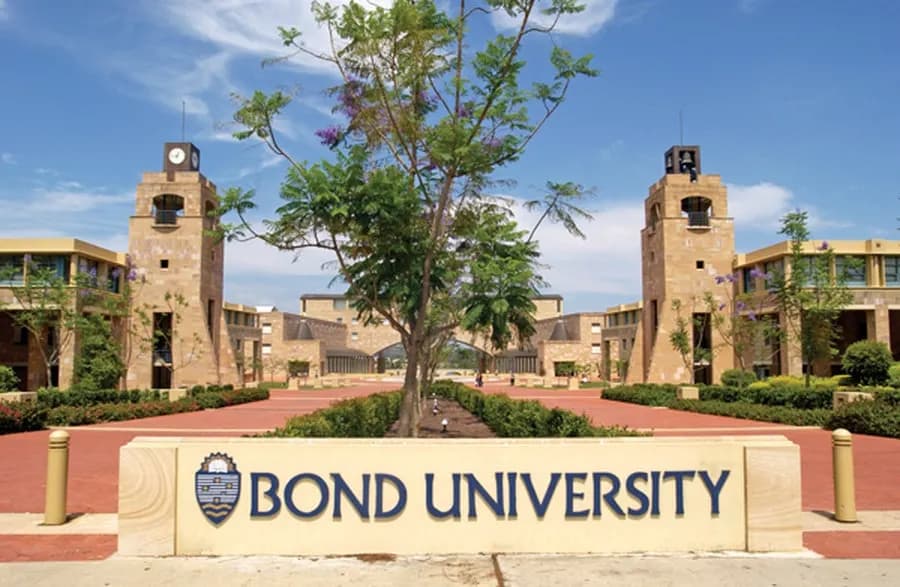
The Faculty of Health Sciences & Medicine at Bond University has opened a search for a Professor or Associate Professor to serve as Head of Discipline for Nutrition and Dietetics. The role pairs a continuing academic appointment with a five-year renewable leadership term, and the salary band signals how seriously the university is treating it: $221,723.17 a year at professorial level, $189,734.53 at associate professor level, plus 12 per cent superannuation. Applications close at 11:59 pm on Tuesday 24 November 2026, with interviews the week of 7 December.
That is the announcement. The translation layer is where this hire will be tested. Bond is recruiting for a discipline that already has real substance — a flagship Master of Nutrition and Dietetic Practice accredited by Dietitians Australia and the US Accreditation Council for Education in Nutrition and Dietetics, with 24 weeks of professional practice internships and a 20-week research internship built in. The new head will also inherit a Graduate Certificate and Graduate Diploma in Nutrition, conjoint appointments with industry, and a team that includes Associate Professor Dianne Reidlinger and Associate Professor Greg Cox. What the role changes on paper is clear; what it changes in practice depends on which of the advertised priorities — program growth, research impact and engagement with the healthcare providers that host placements — is funded first and staffed properly.
Bond's health portfolio is expanding on several fronts at once. The university has broken ground on the Connections Precinct, an 18,000-square-metre development that will unite the Medical Program and the Business School and is scheduled for completion in 2027. Medical enrolments are expected to pass 1,200 within two years. The Bond Institute of Health & Sport has added a northern building that roughly doubles its footprint, bringing a simulated hospital ward, a community clinic offering nutrition and dietetics services, and a commercial teaching kitchen fitted out for dietary assessment and counselling practice. New allied health programs, including speech pathology and clinical exercise physiology, are being stood up in the same period.
Reading the job advertisement against that backdrop changes its meaning. A head of discipline at Bond does not simply manage a course list. They negotiate where nutrition and dietetics sits inside a faculty that is growing quickly and competing for the same clinical placement sites, academic staff and research infrastructure as every other program in it.
The hire lands at a difficult moment for the profession it is meant to lead. Diet-related disease has overtaken smoking as Australia's leading preventable health risk, yet the workforce gap has barely moved: Dietitians Australia puts the shortfall at about 15 dietitians for every 100,000 people, a figure that has not shifted meaningfully in four decades. From 1 July 2027, the Commonwealth Prac Payment will extend $338.60 a week to students in ten allied health disciplines during mandatory placement. Dietetics is not among them, an omission the association has called hard to reconcile with the scheme's own rationale.
For a university program, that exclusion is not a distant policy argument. It lands directly on the question of who can afford to complete the 800 hours of unpaid, mandatory placement that the Accredited Practising Dietitian credential requires — and therefore who can train at all. The full position details are available on the AcademicJobs.com listing and Bond's own careers portal. The advertised mandate to drive sustainable growth will be measured, in practice, by whether Bond can secure enough quality placement positions in Queensland's hospitals, community health settings and a private practice sector that now employs half the dietetics workforce while its own enrolments rise.

The selection criteria are specific and will narrow the field quickly. Candidates need a PhD in dietetics, nutrition or a related discipline, current Accredited Practising Dietitian status or eligibility for it, demonstrated success leading accredited dietetics programs, a research record with national or international recognition, and experience building partnerships with healthcare organisations and professional bodies. The APD requirement is the gate. It means the successful candidate must be, in the eyes of Dietitians Australia, a practising member of the profession — not an administrator borrowed from another allied health field to run dietetics.
The dual structure of the appointment matters more than the title. The continuing academic appointment protects the person; the five-year headship stays renewable by mutual agreement. In practice, the university is hiring someone expected to remain credible inside the discipline for the long term, while being accountable for the discipline's performance on a cycle short enough to review progress against accreditation deadlines and faculty strategy.
Key requirements can be summarised in the order most applications are filtered:
- A doctoral qualification in dietetics, nutrition or a closely related discipline, with APD status maintained or obtainable
- A track record of leading an accredited dietetics program through continuous quality improvement
- Research output strong enough to attract funding and postgraduate supervision, across public health nutrition, sports nutrition or clinical dietetics
- Partnership experience with hospitals, health services, professional bodies and community organisations that host students
The incoming head will not be building from scratch. Associate Professor Dianne Reidlinger, who leads the Master of Nutrition and Dietetic Practice, is the editor of Nutrition & Dietetics, the profession's Australian journal published in conjunction with Dietitians Australia, and her research spans dietary interventions for cardiovascular disease, chronic kidney disease and type 2 diabetes. Associate Professor Greg Cox spent two decades at the Australian Institute of Sport, served as nutrition lead for the Australian Olympic team at Rio in 2016 and is a Fellow of Sports Dietitians Australia. Their combined presence explains why the discipline's advertising foregrounds public health nutrition, sports nutrition, applied nutrition research and the scholarship of dietetics education.
That's a useful signal for applicants. The new head is being recruited to build on a program with genuine research identity and international accreditation reach, and any credible application will need to show how its author would add to that profile rather than replace it. The Connections Precinct under construction gives the discipline a further stake in faculty-wide decisions about teaching space, simulation facilities and where allied health programs sit alongside medicine and business.
What the advertisement does not mention is the constraint that will define the first two years. A study published in the Journal of Human Nutrition and Dietetics found more than half the Australian dietetics workforce now works in private practice at some level, with roughly 30 to 50 per cent of new graduates entering private practice directly while experienced practitioners describe their preparation for that work as suboptimal. Placement capacity is the bottleneck: universities cannot simply enrol more students when supervised practice sites are scarce, and placement fees, geography and placement poverty already skew who can complete a credential. The Council of Deans of Nutrition and Dietetics has told the Australian Universities Accord process that Medicare rules currently stop private practice dietitians from claiming for services delivered by students under supervision, which dulls the incentive to host learners in exactly the settings where future dietitians will work.
Those are not abstractions. They are the spreadsheets the new head will inherit in the first quarter, the emails from placement providers in the second and the accreditation evidence files in the third. Any leadership strategy that does not start with placement capacity is a strategy that will be revised by semester two.

The role listing frames the position as a chance to shape the future of an established program. The more useful way to read it is as a question about the pipeline underneath that program.
If the job were merely to maintain accreditation, mentor staff and keep the Master program full, the candidate pool would be unremarkable. But the advertised ambitions run straight into placement scarcity, the Prac Payment exclusion and a workforce migrating toward private practice faster than the training system is adapting. By year two, the measurable test will not be whether the discipline's profile has risen. It will be how many additional quality placement positions the new head has helped create, and which students were finally able to take them.
- allied-health
- academic-leadership
- bond-university
- higher-education-jobs-australia
- nutrition-and-dietetics