

At a glance
James Cook University is hiring a full-time HDR Program Support Officer in Townsville, paying $78,741 to $89,310 plus 17% super. Closes 10 November 2026.
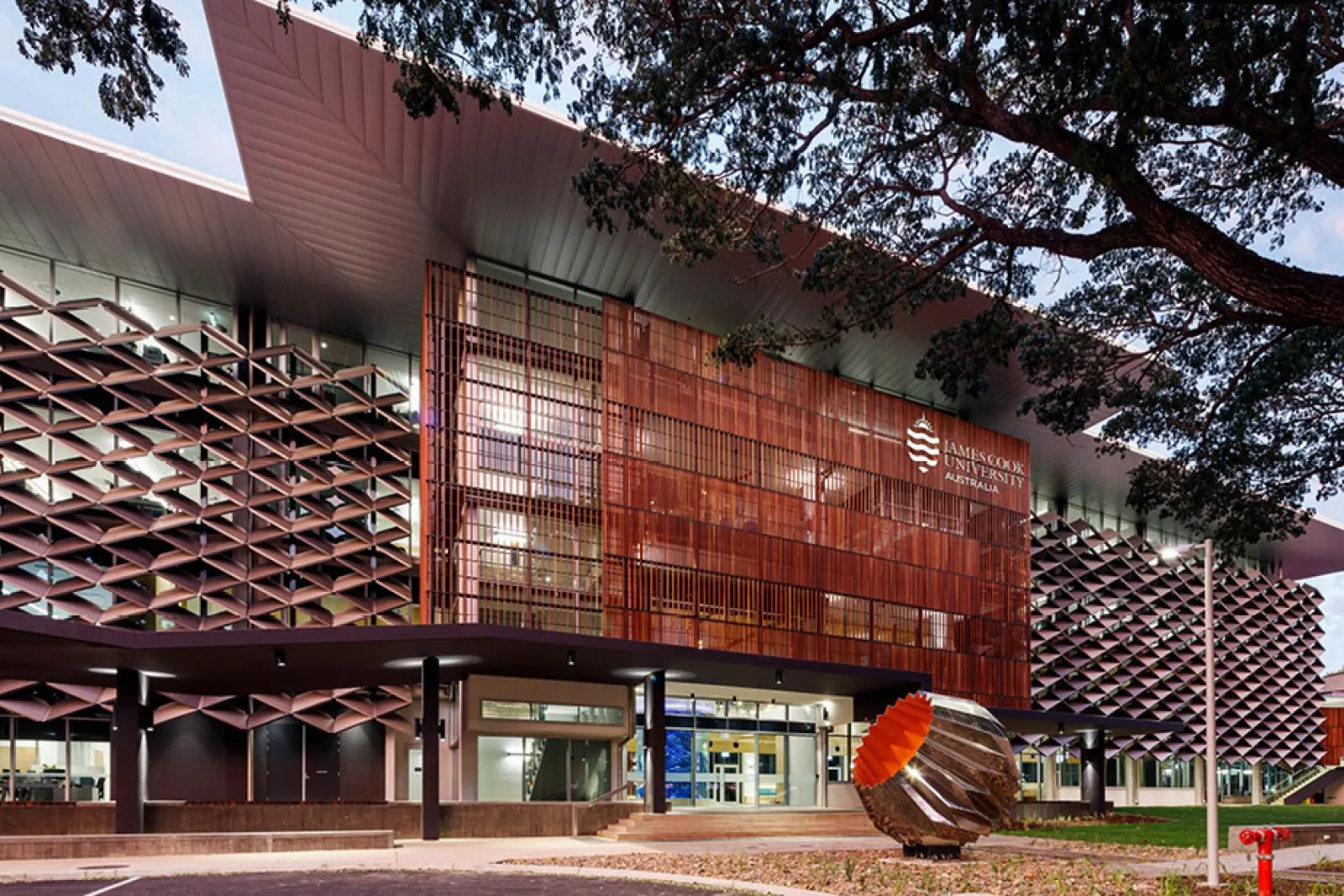
James Cook University is advertising a continuing, full-time HDR Program Support Officer position in its Graduate Research School, based at the Bebegu Yumba campus in Townsville. The role carries a HEWL 5 salary of $78,740.99 to $89,310.33 per annum, plus superannuation of up to 17 per cent. Applications close on 10 November 2026.
Before the phrase HDR Program Support Officer collapses into acronym, it helps to know what one actually does. HDR stands for Higher Degree by Research, the umbrella term for research masters and doctoral programs in Australia. Candidates in these programs are not taught in the usual sense; they conduct supervised research and progress through a sequence of formal milestones. The Program Support Officer sits inside the machinery that tracks those milestones.
The advertisement asks for someone who can combine customer service, organisation, and the particular problem-solving required when a missing form threatens a scholarship deadline. That last phrase does a lot of work. A doctoral candidature at JCU runs through landmark reviews: Confirmation of Candidature early in the degree, a Mid-Candidature Review around the 18-month mark, and a Pre-Completion Assessment before the thesis goes out. Each generates documentation, committee consideration, and, often, a candidate who needs to know what happens next. The officer is the person who answers that question.
What the role actually involves
The day-to-day work sits with the Graduate Research School, the unit responsible for administering Higher Degree by Research candidature and managing the records candidates rely on. On paper, the position covers specialist administrative support across the candidature cycle: admissions, enrolments, variations, examinations, and completions. In practice, it means being the first point of contact for a candidate whose progress report has not uploaded properly and for a supervisor who needs a committee form signed before a deadline.
- Processing admissions, enrolments, and variations of candidature for research masters and doctoral candidates.
- Tracking milestone deadlines such as Confirmation of Candidature and ensuring committee paperwork moves.
- Responding to a steady volume of enquiries from candidates and academic staff about policy and process.
- Supporting committee activities and contributing to continuous improvement of the HDR candidate experience.
- Maintaining accurate records in enterprise systems and Microsoft applications.
The position is one of several HDR Program Support Officers in the Graduate Research School. The current contacts page lists four officers under a team leader, which gives an applicant a useful measure of the workload: this is not a solitary role, but it is also not a large team. The successful candidate will be working in a unit that manages roughly 900 HDR candidates and administers about 140 thesis examinations a year, based on the university's own service summary.
The scale behind the job
Australian higher degree by research is large enough to generate its own administrative gravity. In 2024, 66,503 students were enrolled in HDR courses nationally and 11,037 completed a research qualification, according to Universities Australia. Domestic students made up 58 per cent of completions, international students 42 per cent. Behind every completion sits a file of forms, progress reports, milestone records, and occasional supervisor sign-offs—the paper trail that a Program Support Officer keeps intact.
JCU's Graduate Research School performs the same service in a regional setting. Its published service summary describes a unit receiving and assessing roughly 400 HDR applications a year and administering around 340 scholarships. The administrative load is not static either. The Higher Education Support (Commonwealth Scholarships) Guidelines 2025 replaced the 2017 guidelines on 2 December 2025 and now govern how Research Training Program stipends and fee offsets are awarded. Program Support Officers do not draft that instrument, but they field the questions it generates. Every time a scholarship condition changes, the GRS inbox develops a corresponding bulge.

Continuing or casual: two versions of the same work
When JCU advertised a casual HDR Program Support Officer in September 2026, the hourly rate was set at $52.04 to $59.02. Now the university is recruiting a continuing role at the same level of work. A comparison is worth making because it changes how an applicant reads the advertisement. A continuing position offers paid leave and superannuation, plus a fixed base; a casual position offers flexibility and a higher headline rate but no certainty of hours. The table lays this out plainly.
| Aspect | Casual HDR Program Support Officer | Continuing HDR Program Support Officer |
|---|---|---|
| Engagement | Casual, on-campus Townsville | Full-time, continuing, Bebegu Yumba campus |
| Pay | $52.04 to $59.02 per hour | $78,740.99 to $89,310.33 per annum, plus up to 17% super |
| Leave | Casual loading, no paid annual leave | Five weeks annual leave, 15 days sick/carers leave, parental leave |
| Certainty | Hours as needed, good for short-term flexibility | 36.25 hours per week, stable workload |
The continuing role is the safer bet for anyone who needs an income that is both predictable and defensible before a rental agent. Townsville rents are not Sydney rents, but they still require a regular payslip. The casual rate is excellent for a short stint; the continuing salary is less flashy and far more bankable.
Why Townsville, and why JCU
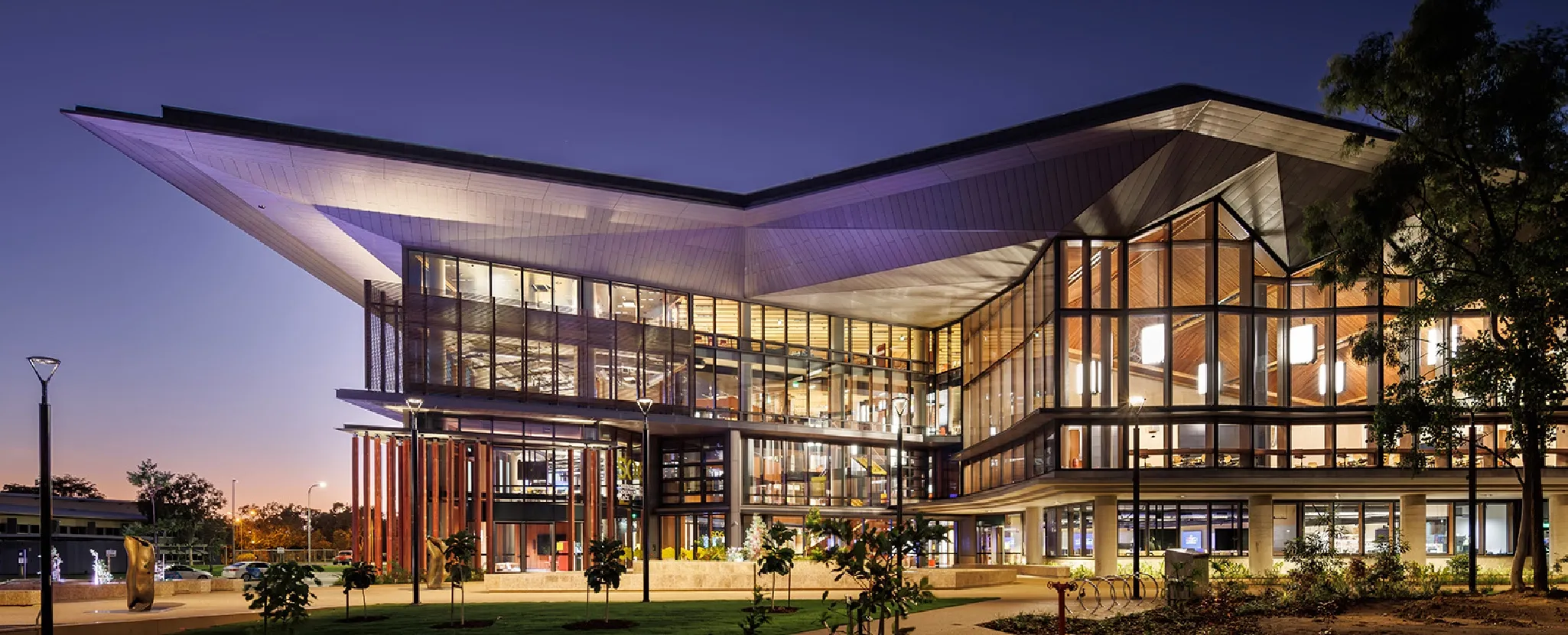
JCU's Townsville campus carries the name Bebegu Yumba, meaning 'Place of Learning' in the Birri-Gubba language, under a naming announced in December 2020. It sits in the suburb of Douglas, a 386-hectare bush and parkland setting about 13 kilometres from the city centre. Around 10,500 students study there, including more than 1,500 international students. The campus has on-site childcare and medical services, and the application notes access to well-equipped modern facilities and contemporary workspaces.
Townsville's cost of living is one of the quieter selling points of north Queensland university work. Weekly shared accommodation in the Douglas area runs considerably lower than in Brisbane, and JCU's own living cost guide lists total weekly expenses in the region around $330 to $460, including rent, food, transport, and the occasional bus fare. That figure is an estimate and subject to change, but the gap to capital-city budgets is real enough to shape a decision. More on the campus is set out on the JCU Townsville campus page.
What strong candidates bring
The selection criteria are not secret. The university wants knowledge of HDR candidature management—enrolment, progression requirements, and completion timelines—plus the accuracy, a respect for policy compliance, and attention to detail that catches typographical errors in committee minutes. It wants strong written and interpersonal communication, specifically the ability to assist people from varied backgrounds while managing a high volume of enquiries. It wants confidence with Microsoft applications, databases, and whatever enterprise system the university happens to use this year. None of this is exotic. It is the standard kit of a university administrator, and the advertisement is honest about that.
What distinguishes a credible applicant is evidence rather than enthusiasm. A cover letter that says 'I am organised' does not survive contact with a busy recruitment panel. A cover letter that says 'I administered Confirmation of Candidature paperwork for 90 doctoral candidates across two faculties' does. The distinction is the same one that applies across university professional roles. For help preparing that evidence, the guidance in our academic CV article applies just as well to a cover letter.
How to apply
Applications go through the JCU careers page. The process is straightforward: create an applicant account, complete the application form, upload a current resume, and upload a cover letter outlining relevant experience against the key requirements. Enquiries about the role go to Gabby Ryan at gabby.ryan@jcu.edu.au. Current JCU students are not eligible, which the advertisement states plainly.
The closing date is 10 November 2026. The university says all applicants will be contacted with an outcome once recruitment is finalised, which is more than many employers promise in writing. The full position description is available on the JCU careers portal.
The advertisement is clear about salary and leave entitlements, plus superannuation. It is less forthcoming about how many candidates the successful applicant will support on a typical Tuesday. That number, more than the campus photographs or the values statement, will determine whether the phrase 'high volume of enquiries' means something manageable or something else entirely. Applicants might reasonably ask it at interview.
- james-cook-university
- university-administration
- research-support
- jcu-careers
- queensland