

At a glance
James Cook University is hiring a Manager, Laboratory and Technical Services for its engineering and physical sciences portfolio in Townsville. Salary, selection criteria, campus context and how to apply.

James Cook University has put one of the more interesting technical leadership jobs in North Queensland on the board. The position title runs long — Manager, Laboratory and Technical Services (Engineering and Physical Sciences) — but the arithmetic is short: keep teaching laboratories safe, compliant and running across chemistry, physics and the engineering disciplines housed at the Bebegu Yumba campus in Townsville. It's a continuing, full-time professional post of 36.25 hours a week. The pay band is HEWL 8, $111,960 to $128,567 a year plus up to 17 per cent superannuation, and applications close on Sunday 1 November 2026.
The appointment sits inside the Education Division's Laboratory and Technical Services group. That placement is the first thing a serious applicant should notice. This is not an academic appointment attached to a school; it's an operations role accountable to student learning outcomes, which changes the kind of evidence that carries weight at interview.
What the position actually owns
The advertisement is specific about the service delivery portfolio. The chemistry span covers analytical, organic and inorganic work, including the instrument-heavy analytical side, and sits alongside physics. The engineering side takes in chemical, civil, computer systems, electrical and mechanical engineering — a mix that touches high-voltage plant, mechanical workshops, hazardous materials and the everyday pressure of teaching timetables. Across that spread, the manager plans and prioritises laboratory and technical services, leads a team of technical officers and makes sure practical teaching runs to an agreed standard, on time and within the rules.
The word 'services' undersells the role. A manager at this level is the person an academic calls when a piece of equipment fails two days before a scheduled practical, the person who signs a risk assessment for a new experiment, the person who notices a maintenance budget tracking short before it becomes a problem and has to tell a head of school that a capital item needs replacing earlier than planned. Two or three examples of those moments, told with specifics, outperform a full page of responsibilities.
The selection criteria point to what panels actually probe:
- Management experience in an engineering, chemistry or comparable technical environment, including the operational demands of complex laboratories and workshops across multiple disciplines.
- Leadership of diverse technical teams, with evidence of building capability, collaboration and a safety-first culture.
- Working knowledge of contemporary instrumentation, specialist workshop equipment and technical facilities used in practical teaching and project-based learning.
- Depth in WHS regulation, Australian Standards and risk management for dangerous goods, hazardous machinery and high-risk activities, plus a willingness to learn accreditation requirements where they're new.
A $100 million building and the staff who keep it honest
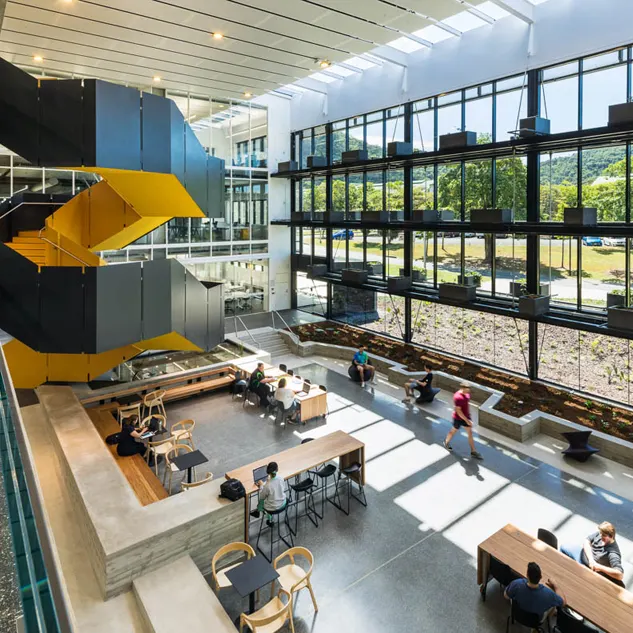
JCU's capital commitments are visible. The Engineering and Innovation Place, opened in early 2024 on the Bebegu Yumba campus, cost about $100 million: four storeys, roughly 9,400 square metres, 23 purpose-built laboratory spaces, a workshop, a maker studio and a multi-modal teaching space. The Structures Lab runs three universal testing machines, the largest capable of applying 100 tonnes of force, alongside a 13.25-metre flume that generates waves for coastal and erosion research. The Physics Lab has a laser optics table; the Multipurpose Lab holds a 3D ceramic printer that has produced medical scaffolds for bone healing. The Science Place next door was Australia's first educational building to earn LEED Gold for sustainable design, reusing 96 per cent of materials from the buildings it replaced and running about 30 per cent better on energy than a standard campus benchmark.
The senior technical officer who opens the Structures Lab on a Monday morning is the person this advertisement is really about. She checks the machines, signs the first risk assessments of the week, chases the part for the flume's pump and answers three academic requests before her coffee cools. The university's newest buildings are internationally recognised; the workforce that keeps them safe is thinner, older on average and harder to recruit, which is exactly what sector-level studies keep finding. JCU's own account of the Engineering and Innovation Place lists the equipment and the awards. It says less about who covers the roster when a specialist technician resigns.
Townsville's numbers: salary, rent and what relocation costs
The salary band is honest money for regional Queensland, without being generous compared with the capital cities. Bond University's laboratory manager begins at $112,654 with 12 per cent super. The University of Melbourne's laboratory manager and OHS adviser sits at $106,432 to $115,211. UNSW pays a laboratory manager in mechanical and manufacturing engineering $118,883 to $146,613. JCU's $111,960 to $128,567, with up to 17 per cent employer super, lands mid-table, though the five weeks of annual leave in the university scheme is a real addition.
Townsville itself has shifted. House prices rose by roughly 28 to 30 per cent through 2024 depending on the measure, taking the geometric mean near $511,758 by early 2025. Median rents sit around $540 a week for houses and $430 for units, and the city is short an estimated 9,000 dwellings against projected need over five years. A candidate relocating from a capital city may find the numbers kinder than Brisbane or the Gold Coast, but the Douglas suburb around the campus is not the cheap end of town, and public transport is thin enough that most staff treat a car as standard. Property analysts have documented the undersupply in detail.
How to apply without wasting the shot
JCU's process for professional staff asks for a completed application form, a current resume and a cover letter that addresses the Key Requirements for Success and the specific selection criteria. The panel wants evidence, not enthusiasm. Each criterion should be matched to a concrete incident with an outcome attached — a number of staff supervised, a risk system rebuilt, a laboratory kept open through a renovation, a budget held while enrolments rose. Generic claims are easy to spot at this level.
One early move separates serious applicants from the rest: contact the listed officer with one substantive question before you submit. Enquiries for the role go to Dr Amanda Norton, Senior Operations Officer, Laboratories and Technical Support, at amanda.norton1@jcu.edu.au. Ask about the estate's current state, the biggest safety challenge the team faced this year, or how the technical services group is structured across campuses. Not salary, not parking, not flexibility. One good question demonstrates the judgement the role requires. The application must be lodged through the JCU careers portal and should not be left to the last evening.
A restructure underneath the vacancy
Careful applicants will notice this advertisement is not an isolated post. JCU has been running parallel searches for managers across Clinical and Simulated Learning, Operations and Safety, the Australian Institute of Tropical Health and Medicine, preclinical sciences and anatomy and pathology, most on the same HEWL 8 band. That pattern signals a deliberate reorganisation of laboratory and technical services under the Education Division — one leadership layer being built across disciplines and campuses at once. It's useful context for anyone weighing the role's scope, because the first two years will likely involve bedding down shared systems as much as running existing ones.
The structural problem underneath is not JCU's alone. A recent global study by the UK Institute for Technical Skills and Strategy with Universitas 21 found institutions in Australia and elsewhere reporting the same pressures: an ageing technical workforce, limited progression pathways, blurred boundaries between technical and academic roles and real difficulty recruiting specialist skills. JCU's response — advertising senior, continuing positions rather than a string of short contracts — is progress worth naming. Whether the salary and development paths are sufficient to pull people from industry is the quieter test. The full report puts the sector-wide pattern in one place.
What could be measured next
The right annual report would count the things this hire inherits and changes. Days a teaching laboratory sits dark for lack of technical cover. The ratio of technical officers to practical-class hours in first-year chemistry, where enrolment pressure lands first. Time to fill across the parallel manager searches now in motion, and the median tenure of technical staff five years after the restructure. Those numbers are less photogenic than a reaction floor or a ceramic printer, but they show whether the institution is investing in the system or the showpiece.
A university that publishes a $100 million building has already answered the capital question. The next question is staffing, and the next question after that is whether anyone will still be there to answer it in a decade. The candidates JCU draws for this post, and how long they stay, will say more than any master plan.
- james-cook-university
- higher-education-jobs-queensland
- jcu-careers
- townsville-jobs
- laboratory-and-technical-services