

At a glance
Bond University is hiring a part-time Technical Officer for its FabLab, bridging digital fabrication and film and TV production. Includes salary, criteria and how to apply.

The advertisement is short, and that is the first thing worth noticing about it. Bond University wants a Technical Officer for its FabLab who can also work in the Faculty of Society and Design's film and television studio. It is a part-time continuing role at 0.6 full-time equivalent, reference number 201409029, with applications closing at 11:59pm on Sunday 8 November 2026. On paper, it is one hire. In practice, it is a decision about how a university staffs the gap between two different kinds of making.
The salary starts at $44,457.97 for the three-day week, a full-time equivalent of $74,096.61, plus 12 per cent superannuation. The full-time equivalent matters because the job was advertised in a different shape a year earlier: a full-time continuing appointment, reference 151107662, built around the fabrication laboratory alone. The newer advertisement widens the remit to cover film and television equipment as well. What it has not widened is the headcount.
One job description, two precincts
The Faculty of Society and Design's specialised teaching spaces run from a wood machining workshop and clean technology spaces to a robotics laboratory, a film and television studio and a suite of editing rooms. Bond's advertising describes the Technical Officer as the role that bridges those spaces, coordinating support between digital media on one side and fabrication on the other. Digital media here covers film and television and screen-based production. Fabrication covers prototyping, model making and robotics. The position reports to the General Manager, FSD Technical Services.
The earlier full-time version of the role reported instead to the General Manager, FSD FabLab, and concentrated on student training, wood machining, prototype assembly and architectural model making. Comparing the two advertisements shows how the position has thickened. Where the old ad asked for woodworking and digital fabrication experience, the new one adds film and television production equipment to the same list. A candidate who could once walk in with a trade ticket now needs to be credible in a television studio as well.
The machinery someone has to look after
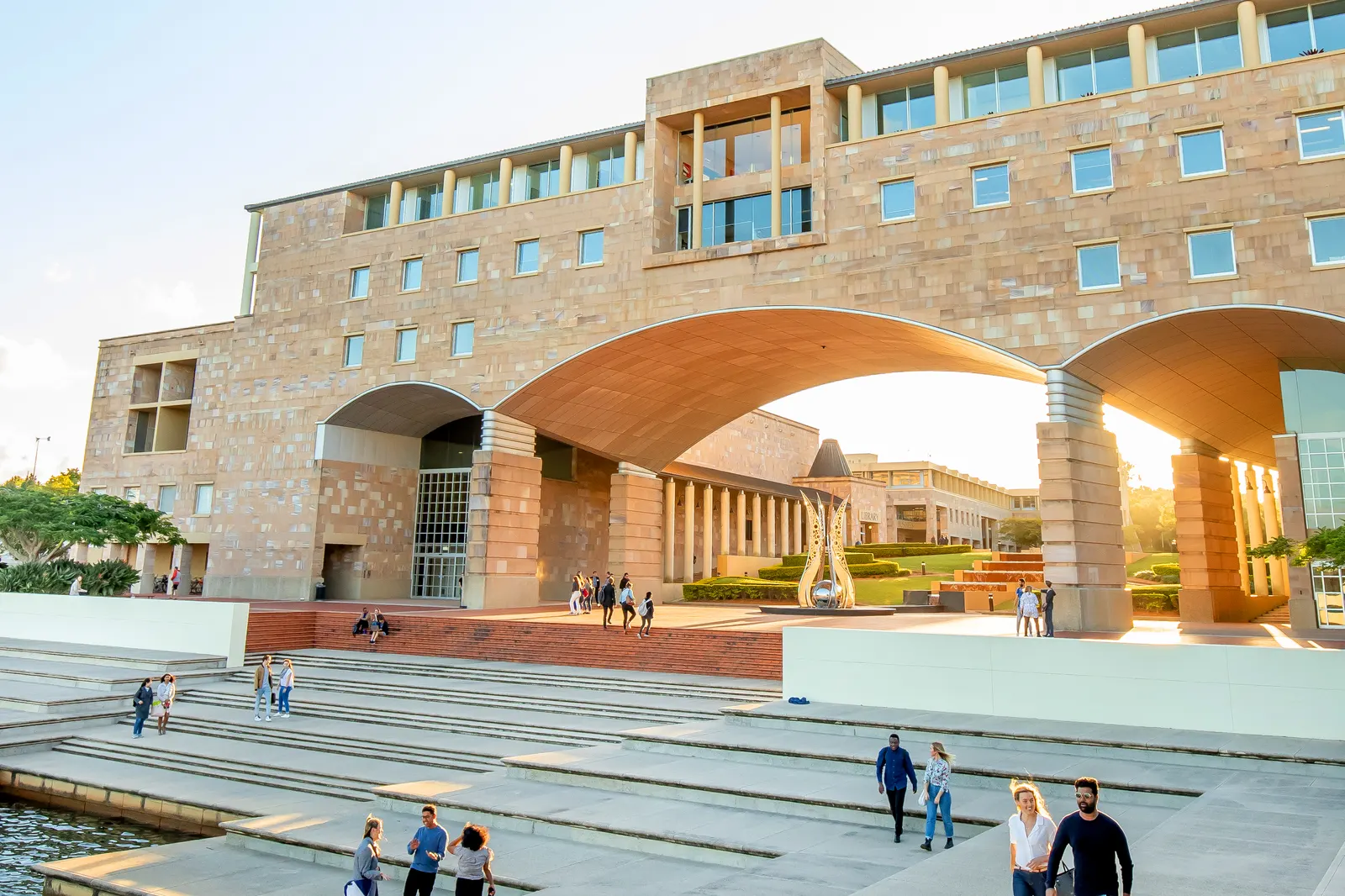
The FabLab sits inside the Abedian School of Architecture, a building designed by the London studio CRAB. Bond's facilities page describes the lab as a fully equipped machine shop with power tools, hand tools and a range of wood processing machinery, built around a high-end CNC router and a large-format CO2 laser cutter. Students can also use vacuum forming machines and 3D printers running materials that include PLA and ABS as well as thermoplastic extrusions such as nylons and terracotta. Adjacent to it is the RobotLab, home to industrial ABB robot arms used for fabrication projects. This is the equipment the Technical Officer will maintain, induct students onto and supervise.
The RobotLab has recently gained something no public-university counterpart has. Bond announced the installation of an ABB fabrication robot described as the first of its kind in Australia and the only one in an educational institution worldwide. FabLab General Manager Ryan Wirth said other units off the production line went to companies such as Ferrari and Tesla. The robot carries a force-control sensor that lets it feel objects, and a quick-change system swapping between as many as 20 tools for cutting, machining and precision drilling. Professor Paul Loh, head of the Abedian School of Architecture, said students are learning the workflows behind automation rather than just pushing a button.
What the three days actually involve
The posting lists the work plainly: student training and supervision, wood machining, prototype assembly, architectural model making and work on robotics and 3D printing programs. The detail sitting underneath those headings is where the role lives. Students in the architecture school complete workshop inductions through a third-party online training database before they are allowed near the machines, and the Technical Officer is the person who checks that training has actually happened and that a student understands the limits of a machine before using it. Bond's facilities page describes the FabLab and RobotLab as staffed by experts in fabrication techniques, software and technology whose job includes giving students the confidence to take on projects safely.
The selection criteria are specific about what that requires. Bond asks for technical qualifications at Certificate IV level or equivalent industry experience in film and television production and fabrication environments, plus demonstrated hands-on experience operating and maintaining woodworking machinery, digital fabrication equipment such as 3D printers and laser cutters, and film and television production equipment. A strong working knowledge of CAD and CAM software and media-editing packages is essential. The advertisement also lists interpersonal and written communication skills, and an understanding of equal employment opportunity, work health and safety and quality assurance practices. None of that is glamorous. All of it is what separates a workshop that runs from one that injures somebody.
The qualification and the thin pipeline behind it
Certificate IV sits at the higher end of Australia's vocational education framework, one step below a diploma. The Certificate IV in Engineering, code MEM40119, is the closest match: it covers computer-controlled machining, robotics, mechatronics, toolmaking and related higher-level trade work, and TAFEs from Victoria University to Federation TAFE deliver it. Several states offer versions of the course under Free TAFE arrangements, which means the formal qualification Bond is asking for is at least accessible.
The pipeline of people who hold it, combined with fabrication and camera experience, is another matter. A review of Australian university websites published in 2016 found only 12 of 43 institutions reported running makerspaces, which suggests most of the technical staffing patterns in this field are young. The Manufacturing Excellence Forum on the Sunshine Coast has made the same point about computer numerical control machining: it says formal education in CAD and CAM remains thin in Australia, and that most computer numerical control machinists are trade-qualified fitters and turners who taught themselves. Lake Macquarie, north of Sydney, opened Australia's first Fab Academy in January 2024 precisely because, as Fab Lab lead Claire Chaikin-Bryan put it, a lot of the skills required for digital fabrication are “usually self-taught and self-motivated.” Bond is fishing in a small pool, and the hybrid film requirement makes it smaller.
What the salary says, and what it does not
The full-time equivalent of $74,096.61 puts the Bond role below most comparable technical officer positions at Australian public universities. The salary figures from recent advertisements tell the story in one glance.
| Institution | Role | Salary (full-time equivalent) | Super |
|---|---|---|---|
| Bond University | Technical Officer – FabLab | $74,096.61 | 12% |
| Macquarie University | Technical Officer (Mechatronics) | $88,670 | 17% |
| Monash University | Technical Officer | $96,768 – $104,450 | 17% |
| University of Queensland | Senior Technical Officer | $95,361.62 – $102,302.92 | 17% |
| UNSW | Senior Technical Officer (Makerspace) | $110,073 – $119,132 | 17% |
Bond's 12 per cent superannuation is also below the 17 per cent typical at public universities.
None of this means the Bond role is unattractive. Staff benefits include free parking, parental leave of up to 18 or 26 weeks, salary packaging, 17.5 per cent leave loading and study assistance for staff and dependants. The 0.6 structure can suit a person keeping a trade practice alive, returning from industry, or balancing caring work. But the comparison matters because the people with the skills Bond needs read university salary pages as well as job advertisements, and the part-time structure and the below-market rate land on the same candidate together. The strongest applicant is effectively being asked to accept a lower base and a smaller super guarantee for the privilege of teaching on a machine no other Australian students can use.
How to apply
Applications go through Bond University's online portal. Candidates who have not applied before create an account, either by uploading a resume or by entering details manually, then attach a current resume and a cover letter that addresses each selection criterion in the position description. Current Bond staff apply through HR Connect. The university says any appointment is subject to pre-employment checks covering working rights verification, reference checks and a certified copy of the highest qualification. Preferred candidates complete a Gender-Based Violence Declaration under the National Higher Education Code to Prevent and Respond to Gender-based Violence 2025. Conditions of employment sit under the Bond Workplace Agreement.
The advertisement says continuing, which means the university intends this to be more than a stopgap. Year two will test that intent. The person in the role will be there three days a week, and the FabLab's induction queue and the film studio's shoot schedules will not coordinate themselves. The question for Bond is whether a position designed to cover two precincts gets a second body when both are busy, or whether one enthusiastic hire quietly carries a full-time workload at 0.6 pay. The university will answer that in 2027, not in the position description.
- 3d-printing
- bond-university
- university-jobs-australia
- technical-officer
- digital-fabrication