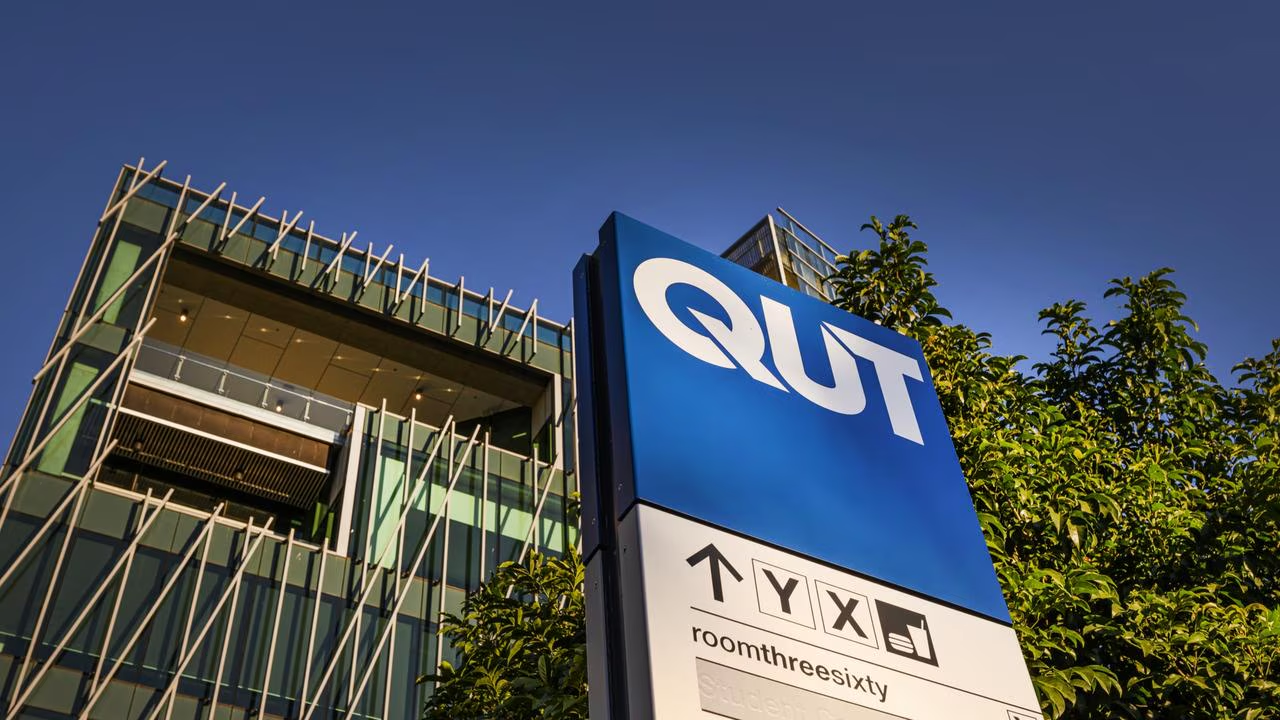
It's week three of first semester, and a third-year industrial design student at QUT's Gardens Point campus is standing over a prototype, explaining why the recycled-plastic joint on a chair keeps failing under load. The person listening is not a full-time academic. She runs a small product studio in West End three days a week and has been brought in for a single semester to take this studio group. QUT calls her a sessional academic.
The School of Design is building that pool again. A listing posted through QUT's jobs portal seeks sessional academics to support learning and teaching across the Bachelor of Design, with successful applicants contacted by unit coordinators as teaching needs firm up and their resumes held on file for 12 months. So what does it actually mean to put your name in that pool?
What the School of Design is actually hiring for
The School of Design sits within QUT's Faculty of Creative Industries, Education and Social Justice. Its Bachelor of Design runs studio-based majors in fashion, industrial design, interaction design and visual communication, with a postgraduate pathway in strategic design. The listing also flags foundation and Impact Lab units, the cross-disciplinary first-year spaces where students from different majors work together on briefs tied to industry and community partners.
Fashion teaching happens mostly at the Creative Industries Precinct at Kelvin Grove, about three kilometres north of the Brisbane CBD, while industrial design, interaction design and visual communication run from Gardens Point beside the City Botanic Gardens. A sessional might spend one semester in a textile studio and the next in a digital fabrication workshop.
That split matters because design teaching is not a lecture-recording job. Students expect critique, iteration and feedback, and the university runs the degree as project-based with real client briefs. QUT's art and design programs rank first in Queensland and inside the world's top 150 in the QS World University Rankings by Subject 2026.
Who the school is looking for
The entry bar is deliberately lower than a continuing academic appointment, and that is the point of a sessional pool. QUT asks for a minimum undergraduate degree in a design-relevant field, current industry experience, and some experience teaching or assessing. A willingness to complete QUT's induction and mandatory online training is non-negotiable. You do not need a PhD; a practitioner's portfolio and the ability to run a critique carry real weight here.
The competition sits at the edges. Unit coordinators contact people whose profiles match specific units, so an expression of interest that names a major and shows where you have taught or assessed before beats a generic design CV every time.
A week in the life of a design sessional
Most allocations involve leading a studio or tutorial, demonstrating software, supporting students in workshops, or marking assessment such as folios. Some blocks bundle a three-hour studio with preparation and marking into one weekly commitment. A fortnight can run from preparing class materials to running critiques, answering student messages, grading a digital portfolio submission, and writing feedback notes before the next session.
The workload is not guaranteed. A single allocation can be as little as two hours a week for one semester, and as this earlier breakdown explains, coordinators often reach into the pool at short notice when a studio needs covering. If you teach across more than one unit, QUT issues a separate appointment for each, and the school can adjust a contract if enrolments shift. That is normal for casual academic work, but it is worth going in with your eyes open.
What you'll be paid, and what the rate actually covers
Pay is set by the QUT sessional academic salary scales under the QUT Enterprise Agreement (Academic Staff) 2022-2025, not by negotiation. A base tutoring rate is $162.39 an hour from the first full pay period on or after 1 December 2024, rising to $165.63 from 1 December 2025. The rate for someone with a PhD or coordinating responsibilities is $194.37, rising to $198.26. Each figure is inclusive of a 25 per cent casual loading, and the rate is meant to cover associated working time such as preparation and marking, not just the hour in the room.
Repeat deliveries of the same tutorial within a teaching cycle attract less: $108.15 rising to $110.32, or $129.50 rising to $132.09 with a PhD. Two things trip most of us up. The first is activity classification, because running a studio is a different category from marking, and a new unit built from scratch should be costed separately rather than absorbed into a standard rate. The second is the loading itself: it replaces paid annual leave and personal leave, which sessional academics do not accrue. Our earlier explainer on the role walks through the day-to-day detail if you want more.
The compliance history worth knowing before you apply
QUT signed an enforceable undertaking with the Fair Work Ombudsman in November 2025 after back-paying more than $1.9 million, including interest and superannuation, to 433 underpaid staff. Most identified so far were professional services staff, but the comprehensive external review, run by KPMG, covers roughly 18,000 current and former employees over a six-year period and explicitly includes sessional academic staff.
The university's staff pay entitlements review page explains the cause plainly: QUT's payroll system did not automatically pay minimum engagements, including the two-hour minimum for sessional academics, and separate claims were needed for overtime. QUT first became aware of underpayments in 2019 and self-reported its audits in 2021. Under the undertaking it must build an integrated timesheet, embed compliance in council governance, notify current and former staff of the review, and pay a $250,000 contrition payment.
None of this means you will be underpaid. It means most of us would do well to keep our own records of hours worked, check the activity classification on every contract, ask whether marking is paid per hour or per piece, and save copies of every timesheet.
How casual academic work is changing nationally
The context has shifted faster than most job ads suggest. Casual staff made up about 20 per cent of academic full-time equivalent roles in Australian universities in 2023, but Times Higher Education reported in April 2026 that the permanently employed share had risen as casual numbers fell, with conversion clauses in some enterprise agreements driving projected reductions of up to 21 per cent.
For a new sessional, the practical takeaway is that a semester of studio teaching is still genuinely casual, but the sector's direction of travel is toward conversion and longer engagements. That does not make this role a foot in the door to a continuing job by itself, and it does not stop you from teaching brilliantly for a semester and then waiting for the next allocation. It does mean the terms are shifting underneath everyone.
Applying: the expression-of-interest route, step by step
The School of Design listing does not demand a long written response to selection criteria. It asks for an expression of interest by email with a resume capped at three pages. Missing any of these details gets the application skipped, so treat the checklist as the first screen.
- Nominate your major of interest from fashion, industrial design, interaction design, visual communication or strategic design.
- State your highest level of education.
- Include your best contact number and email address.
- Attach your CV, no more than three pages.
Send it to the school's design team at ciesj.design@qut.edu.au. The same role is indexed on the AcademicJobs QUT listing if you want the portal reference, and QUT's jobs portal carries the formal advertisement. Your resume stays on file for 12 months.
Before you send anything, open the Bachelor of Design course page and name three units you could teach or tutor tomorrow. A three-page CV that says "interaction design, years of client work, ran two workshops" is good. One that shows you know which units actually run in the major is better.
The tutor at Gardens Point does not have a continuing contract. She has a semester, a room full of students who treat their prototypes as personal, the quiet authority that comes from having shipped real products people use, and no guarantee of the next unit. The pool QUT is building now is how the school finds its next few hundred hours of exactly that kind of teaching. Whether it stays a stopgap or turns into something longer depends on what the sector does next, and on what you put in the email.