
At a glance
QUT is hiring an ongoing, full-time Disability Inclusion Program Coordinator in Brisbane, paying $103,811 to $113,557 plus superannuation. Here's what the role does and how to apply before 28 October 2026.
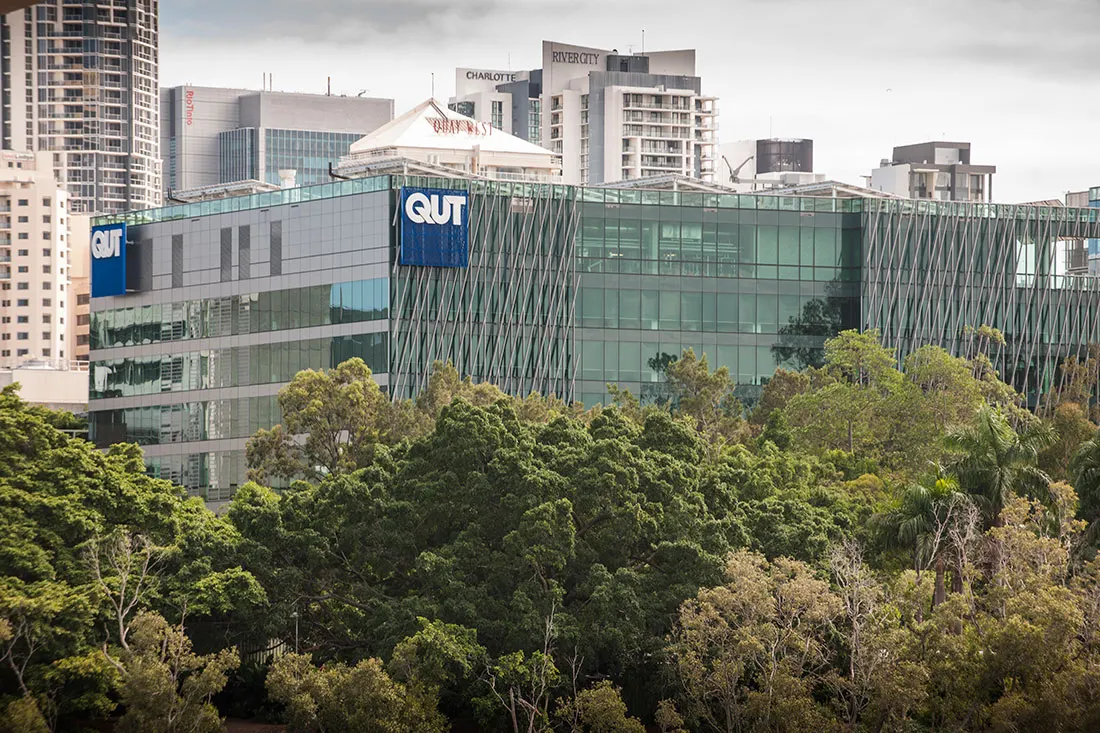
Queensland University of Technology opened applications on 15 October 2026 for a Disability Inclusion Program Coordinator, and the window is short: applications close on Wednesday 28 October 2026 at 11:30pm. The role is ongoing and full-time, based at the Gardens Point campus in Brisbane's CBD, and it sits in Student Services within the People Services arm of the Administrative Division. It reports to the Manager, Disability and Accessibility Services.
The pay is the easy part to verify. QUT classifies the job at Higher Education Worker Level 7 (HEW7), with a salary of $103,811 to $113,557 a year. Add 17 per cent superannuation and 17.5 per cent recreation leave loading, and the total package lands between $122,852 and $134,385. Applicants need ongoing full-time work rights in Australia.
On paper the title could belong to any large employer. In practice it is a coordination role carrying one strategy — QUT's Disability Education and Workforce Inclusion Strategy — plus the projects funded through its Disability Support Fund (DSF). The person hired will be judged on whether initiatives actually land, not on whether the right words appear in a plan.
What the role does day to day
QUT's position description names four core functions: project governance, stakeholder engagement, communications, and evaluation and reporting. None of them are glamorous, and all of them are where inclusion work either holds or collapses. The DSF is the money side; it funds specific initiatives, and the coordinator tracks each project against its plan, milestones and reporting line so the fund's outcomes are documented rather than assumed.
There is a second, sharper instruction in the description. The coordinator runs accessible engagement and co-design activities so students and staff with disability, lived experience groups, allied service teams and other stakeholders shape initiatives rather than being consulted after a decision is already made. That is the difference between an inclusion program and an announcement.
The scale behind the role is concrete. QUT's Disability and Accessibility Services team reported 32,000-plus adjustments for about 2,900 students across 40 teaching periods in 2025, including more than 15,000 end-of-semester exam adjustments. Its manager, Belinda Russell, sums up the operating principle in one line: inclusion has to be everybody's business across the university. A coordinator in this structure isn't running a communications campaign; they're keeping a busy adjustment pipeline connected to a strategy.
One distinction matters if you're deciding whether to apply. The student-facing disability advisors handle individual access plans; this coordinator handles the strategy layer above them, along with committee secretariat work, capability building, reporting, and the evidence trail that tells leaders whether the strategy is working. If you'd rather sit with students than sit in steering committees, the adjacent Disability and Accessibility Services team is where that work lives.
The numbers that frame the job
According to the Australian Bureau of Statistics' 2022 Survey of Disability, Ageing and Carers, 5.5 million Australians — 21.4 per cent of the population — have disability, up from 17.7 per cent in 2018. That's the base rate this role sits inside.
The employment figures are where the gap is. The Australian Institute of Health and Welfare reports labour force participation of 60.5 per cent in 2022 for people with disability aged 15 to 64, up from 53.4 per cent in 2018, against roughly 82 per cent for people without disability. Median gross income was $575 a week for working-age people with disability, compared with $1,055 for people without. The same data trail shows 45.2 per cent of employed people with disability reported unfair treatment or discrimination from an employer because of disability in the previous 12 months.
The exception shows up where institutions treat access as a system rather than a favour. The Australian Human Rights Commission records that university enrolments by students with disability rose 64.9 per cent between 2012 and 2018, against 18.6 per cent growth overall, reaching about 7.3 per cent of new enrolments. QUT's 32,000 adjustments in a single year is the operational trace of that demand — the requests keep arriving, and someone has to make sure they're met, recorded and learned from.
There's an honest caveat in the sector's own research. A disability-led project at Griffith University found university funding still scales with study load rather than support need, so a part-time student with disability can carry support costs that don't shrink with a reduced subject load. A strategy role doesn't fix that arithmetic; it makes the mismatch visible and pushes against it.
Why the role exists now
Australia has had federal disability discrimination law since 1992. The Disability Discrimination Act 1992 makes it unlawful to discriminate in education and employment, and it requires reasonable adjustments unless the adjustment would impose unjustifiable hardship. The Disability Standards for Education 2005 then set out clearer duties for education providers on access to curriculum and participation, and on support services.
The national direction has tightened since. The Australian Disability Strategy 2021-2031 names education and employment as priority areas, and the Disability Royal Commission's final report, delivered in September 2023, warned against fitting disabled people into unchanged systems and called for genuine involvement at the design stage.
QUT's own plan shows what that looks like in practice. The Disability Inclusion Action Plan 2022-2025 commits the university to Web Content Accessibility Guidelines (WCAG) 2.1 Level AA across web content, Authoring Tool Accessibility Guidelines for the learning management system, auto-captioning on Zoom and Echo360, and Universal Design for Learning support for teaching staff. The coordinator's job is to keep work like that moving through governance and reporting, and through the projects the DSF funds.
What this means for your application
You have until 28 October, which is enough time for two drafts and one careful read of the selection criteria, not a ground-up rethink. A coordinator role is judged on outputs, so write about outcomes with numbers attached, not values with adjectives.
The position description asks for several things worth translating into evidence:
- Name the specific plan or strategy you coordinated — a disability action plan, an employment strategy, a learning access initiative — and say whether it finished, not just started.
- Describe the consultation structure you used, including who held decision-making power, not merely who was invited.
- Attach a measurable outcome: adjustment uptake, training sessions delivered, audit items cleared, complaints resolved, or an accessibility defect backlog reduced.
- Show you understand the legal tests behind reasonable adjustment and unjustifiable hardship under the Disability Discrimination Act 1992.
- If you've worked with WCAG 2.1 AA audits, accessible procurement or assistive technology, name the systems and the defects you cleared.
On lived experience: it is not a requirement, and no panel can require you to disclose. If you choose to reference it, tie it to the work — what you noticed and what you changed, with a number on the change. A sentence about a changed outcome will always outwork a paragraph about identity alone.
One thing to avoid: treating this as a generic equity role. Disability inclusion carries its own legislation, standards and consultative practice, and a panel will notice if your application could be pasted into an ad for any other diversity stream. Anchor every example to an access, adjustment, inclusion or service-delivery outcome.
Read the full position description before you write anything, because it is the only authoritative list of duties and selection criteria for this vacancy.
How to apply
The application goes through QUT's recruitment portal, and the closing time is hard: 28 October 2026 at 11:30pm.
One concrete next step. Open the position description, copy the selection criteria into a document, and write one evidence-backed example under each before the deadline. That's the application. The cover letter polish and the formatting come second.
- higher-education-jobs
- university-jobs
- disability-inclusion
- queensland-university-of-technology
- student-services