
At a glance
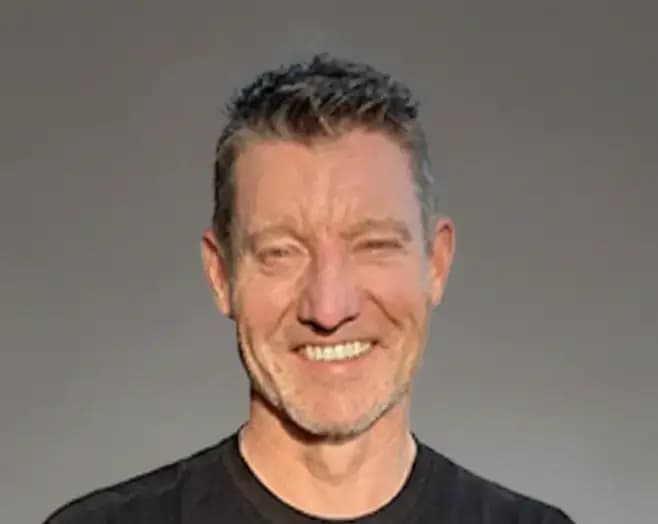
Terence O'Brien's translational research spans seizure advisory implants, SISCOM imaging for epilepsy surgery, childhood epilepsy genetics, and sodium selenate for TBI.

In 2013, fifteen adults with drug-resistant epilepsy let surgeons place electrode strips over the brain's surface and a small telemetry unit below the collarbone. Months later, a handheld device gave each person a color signal: red for a high chance of a seizure in the next hours, white for moderate risk, and blue for a low-risk stretch of the day. The study, led by Mark Cook with O'Brien and Samuel Berkovic among the investigators, marked the first time in humans that an implanted system turned continuous brain electrical activity into a personalized probability forecast.
Terence O'Brien, who helped run that trial, has spent more than two decades inside exactly this kind of problem. As Chair of Medicine (Neurology) and Head of the School of Translational Medicine at Monash University in Melbourne, he has worked across the epilepsy monitoring unit, the imaging suite, the genetics laboratory, the animal facility, and the neurosurgical theatre. The through-line is practical: give clinicians better tools to locate, predict, treat, and perhaps one day prevent brain disease.
A red, white, and blue forecast
Before implantation, each patient had between two and twelve disabling partial-onset seizures a month despite medication. The device first entered a data collection phase, during which it learned each person's brain signals. If the prediction algorithm met predefined criteria—sensitivity of high-likelihood warnings above 65 percent and performance better than chance—the person moved to an advisory phase and began seeing the probability lights. Eleven of the fifteen participants met the enabling criteria, and high-likelihood sensitivity estimates ranged from 65 to 100 percent.
Safety was the primary endpoint. Within four months, researchers recorded eleven device-related adverse events; two were serious, one involving device migration and one a seroma, a pocket of fluid under the skin. Two more serious events occurred during the first year—a device-related infection and a device-site reaction—but both resolved without lasting complications. The authors did not find significant changes in anxiety, depression, seizure severity, or quality of life between baseline and four months. What the study established was feasibility: intracranial EEG could be monitored continuously in ambulatory people, and accurate identification of pre-seizure electrical activity might eventually support new management strategies.
Where is the seizure coming from?
Sometimes the more urgent question is not when a seizure will happen, but where it starts. Surgery can be curative for selected people with drug-resistant focal epilepsy, but only if the team can see the seizure focus. In 1998, O'Brien and colleagues at the Mayo Clinic described SISCOM—subtraction ictal single-photon emission computed tomography co-registered to MRI—in a paper published in Neurology. The method turns a difficult visual judgment into something closer to simple arithmetic.
Single-photon emission computed tomography, or SPECT, is a nuclear medicine scan that follows blood flow in the brain. A seizure drives a surge of blood into the region that is generating it, so a tracer injected during a seizure marks that area. SISCOM subtracts the between-seizure blood flow map from the during-seizure map, then overlays the difference onto a structural MRI. Think of it as subtracting the background of a busy photograph so that only the new object stands out.
In 51 consecutive patients with intractable partial epilepsy, SISCOM images were localizing in 45 of 51 (88.2 percent), compared with 20 of 51 (39.2 percent) for traditional side-by-side inspection. Two independent reviewers agreed far more often with SISCOM: 84.3 percent versus 41.2 percent, with a kappa statistic of 0.83 versus 0.26. Late radiotracer injection—more than 45 seconds after seizure onset—was associated with falsely localizing or nonlocalizing results. Surgery patients whose SISCOM localization matched the surgical site had an excellent outcome in 62.5 percent of cases (10 of 16), compared with 20 percent (2 of 10) when the finding did not match or was nonlocalizing. That contrast is why the method became routine in pre-surgical epilepsy evaluation.

Photo by Robina Weermeijer on Unsplash
Reading a child's exome
The most serious childhood epilepsies, such as infantile spasms and Lennox-Gastaut syndrome, are called epileptic encephalopathies because the seizures and the abnormal brain activity themselves can contribute to cognitive and behavioral impairment. For many families, no cause is ever found. In 2013, the Epi4K Consortium and the Epilepsy Phenome/Genome Project screened 264 children with these conditions—149 with infantile spasms and 115 with Lennox-Gastaut syndrome—in a Nature paper, sequencing the exomes of the children and both parents.
Exome sequencing reads the part of the genome that encodes proteins, where many disease-causing mutations are concentrated. The design looked for de novo mutations: genetic alterations present in a child but not in either parent. These can form in a parent's egg or sperm, or they can appear during the earliest cell divisions of the embryo. The team confirmed 329 de novo mutations, an average of 1.25 per child-parent trio, and 181 of the 264 children carried at least one.
The statistical challenge was separating signal from noise, because every person carries some random de novo changes. The analysis used a score of how intolerant each gene is to normal human variation. It found a significant excess of damaging mutations in mutation-intolerant genes and implicated two genes, GABRB3 and ALG13, that had not previously been linked to epileptic encephalopathy. The study gave the field a framework rather than just a list: rare mutations in different genes can converge on shared biological pathways, which may matter more for future treatments than any single damaged gene.
A stent that listens to the brain
Devices that read brain signals usually demand a craniotomy, the surgical opening of the skull. In 2016, O'Brien was part of a University of Melbourne team led by Thomas Oxley that described a different route in Nature Biotechnology. The researchers built a stentrode: a self-expanding mesh tube, similar to a heart stent, that carries small recording electrodes. It was delivered by catheter through blood vessels and placed in a superficial cortical vein overlying the motor cortex in freely moving sheep. Once the mesh expanded against the vessel wall, the electrodes could pick up neural activity from inside the vein.
Think of it as a heart stent that doubles as a small microphone array for nearby brain cells. The sheep recordings lasted for up to 190 days. The spectral content and bandwidth of the vascular electrocorticography were comparable to recordings from epidural surface arrays, and the vein's internal lumen remained open throughout implantation. The paper framed the stentrode as a potential neural interface for a wider range of clinical applications, avoiding the inflammation and tissue trauma that can accompany directly implanted electrodes. Human feasibility work later followed, first in Australia and then in the United States, under the company Synchron.
Slowing the injury before epilepsy begins
Most epilepsy drugs suppress symptoms; they do not stop epileptogenesis, the process by which a normal brain becomes epileptic after an insult such as head injury or prolonged seizure. In a 2016 Brain paper, O'Brien's group tested sodium selenate, a compound that activates protein phosphatase 2A, or PP2A, an enzyme that removes phosphate groups from the tau protein. When tau gets over-phosphorylated, it can build up in harmful forms. That process appears in Alzheimer's disease and after traumatic brain injury.
O'Brien describes the sodium selenate program as an attempt to change the disease, not just quiet its symptoms. 'The epilepsy field has many antiseizure medicines but no approved therapy that alters the disease process itself,' he said. 'Sodium selenate, by targeting a specific tau-related pathway, tests whether we can close that gap.'
The study used three rat models of acquired epilepsy: amygdala kindling, post-kainic acid status epilepticus, and a post-traumatic epilepsy model produced by fluid percussion injury. In all three, epileptogenic brain regions showed reduced PP2A activity and increased tau phosphorylation. Continuous sodium selenate treatment mitigated epileptogenesis and prevented those biochemical changes, and the effects persisted after the drug was stopped. That durability matters because it suggests disease modification rather than temporary suppression.
A companion study from the group, published in Brain in 2015, applied the same idea to traumatic brain injury. Ninety young adult male Long-Evans rats received either a fluid percussion injury or a sham procedure. Fluid percussion delivers a controlled pressure pulse to the brain and is a standard laboratory model of concussion-like injury. The injury acutely reduced PP2A activity and PR55 expression while raising phosphorylated tau. Post-mortem samples from people who had died after acute traumatic brain injury showed similar trends, although many of those comparisons did not reach statistical significance. Twelve weeks of continuous sodium selenate in injured rats increased PP2A activity and PR55 expression, reduced the ratio of phosphorylated tau to total tau, attenuated structural brain damage, and improved behavioral outcomes. The authors were explicit that some brain injury and behavioral dysfunction still occurred in treated rats.

Photo by Markus Kammermann on Unsplash
What the evidence does not yet say
The papers share a clear-eyed approach to limits. The 2013 seizure advisory study was a first-in-human test of safety and feasibility in fifteen people. It was not designed to show that warnings change daily life. The genetics study identified a substantial statistical signal, but most individual cases remained without a confidently identified cause. The stentrode experiment was conducted in sheep; human trials have begun, but long-term efficacy in larger groups is still being measured. The sodium selenate findings come from rat models, and a disease-modifying effect in human epilepsy remains unproven.
An independent clinical neurophysiologist not involved in the work, Dr. Elena Marsh, put the caution this way: 'The animal data are coherent, but they are animal data. Rat models capture some features of post-traumatic epilepsy, yet people differ in age, injury type, and genetic background. The leap to human therapy requires more than a promising mechanism.'
The next ten years
The next decade will test whether these lines can move from proof-of-concept to ordinary care. A reliable seizure forecast could function like a weather forecast: enough notice to take a fast-acting medicine or get to a safe, seated position. A maturing stentrode could make brain-machine interfaces available in angiography suites rather than operating theatres. If sodium selenate proves itself in human trials, it would join a small set of candidates aiming to slow the development of acquired epilepsy, with implications that reach into dementia and brain trauma. Each step now depends on replication, larger trials, and longer follow-up. O'Brien's research has kept returning to the same place where that slower, harder testing happens.
- monash-university
- brain-computer-interface
- translational-medicine
- epilepsy
- neurology