

At a glance
The AITHM laboratory manager role at James Cook University Cairns carries a $111,960 to $128,567 HEWL 8 salary plus 17 per cent super, PC3 containment duties and a tropical health research brief.
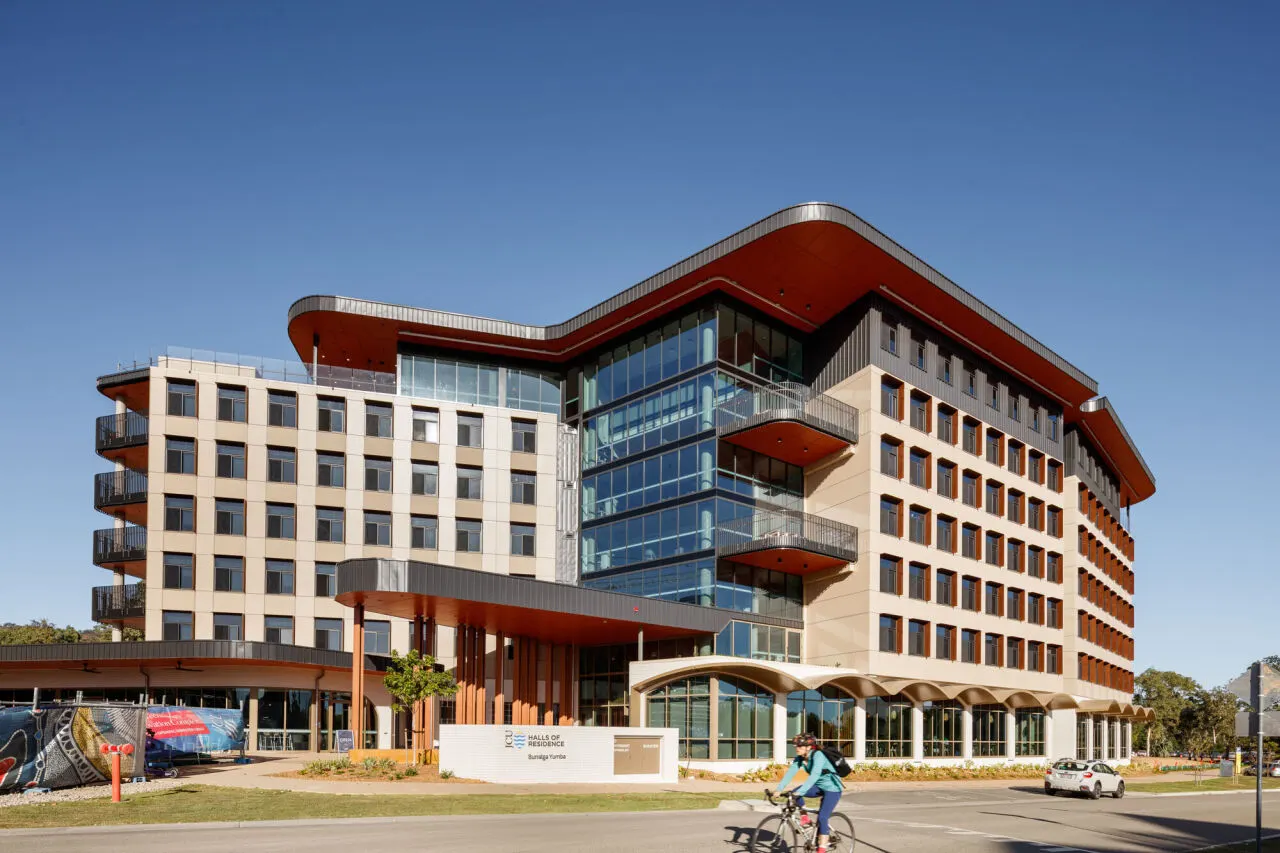
James Cook University has opened recruitment for the Manager, Laboratory and Technical Services at the Australian Institute of Tropical Health and Medicine (AITHM), based at the Cairns Nguma-bada campus in Smithfield. The title is long enough to hide the real shape of the job: this is the person who keeps Physical Containment Level 2 (PC2) and Level 3 (PC3) laboratories, mosquito insectaries and specialist analytical equipment working for researchers studying pathogens that do not respect a semester timetable.
The role sits at Higher Education Worker Level 8 (HEWL 8), paying $111,960 to $128,567 per annum plus up to 17 per cent employer superannuation, for a continuing full-time appointment of 36.25 hours a week. It is a professional staff leadership post, not an academic appointment, and the selection panel will be probing operational judgment rather than publication records.
A professional services post with operational teeth
AITHM is Australia's only dedicated tropical health and medicine research institute, established in 2013 with funding from the Queensland Government and the Australian Research Council. More than 300 laboratory scientists, field scientists and clinicians work across its nodes in Townsville, Cairns, Mackay and Thursday Island. The manager recruited here does not run one lab; they keep a distributed research operation compliant, staffed and supplied.
That distinction matters because the role is advertised on professional staff terms. The panel wants evidence of leadership in laboratory operations, technical services or research support environments, not a grant record. It is the same operational logic JCU has applied across a family of HEWL 8 laboratory manager roles in 2026, each split by discipline, but this one sits inside AITHM rather than the Education Division.
What the new manager actually owns
The portfolio is laboratories plus the technical services that keep them useful. In AITHM that means PC2 and PC3 laboratories, mosquito insectaries and other environments supporting tropical health and infectious disease research. PC2 is the standard for moderate-risk biological agents, with restricted access and biosafety practice. PC3 adds directional airflow, controlled access and strict procedures for organisms that can cause serious disease through inhalation.
The manager's day runs across resource allocation, facility governance, safety and compliance, and leading a team of technical professionals. The successful candidate is the person academics call when certified containment loses pressure two days before an experiment, when a service contractor cannot reach Smithfield before the next field season, and when a maintenance budget is tracking short before anyone notices.
A Cairns facility built for containment
The physical plant in Cairns is not a set of generic benches. AITHM research facilities at the Nguma-bada campus include multiple Office of the Gene Technology Regulator (OGTR)-certified PC2 laboratories, two dedicated invertebrate research facilities, a biobank for cryogenic storage of clinical samples, and an advanced protein analysis facility with electrospray ionisation and MALDI mass spectrometry plus nuclear magnetic resonance spectroscopy. Full details are available on the AITHM research facilities page.
An additional Tropical Health Research and Training facility on the Cairns campus was completed in early 2018 at a construction cost of $28 million, with $18 million from the Australian Research Council Special Research Initiative, $6.5 million from the Queensland Government and the balance from JCU. It added more than 200 square metres of laboratory space approved for research subject to biosecurity control, used for bio-discovery work on venoms, toxins and microbes from Queensland rainforests and reefs.
Why this hire sits inside a national research problem
The urgency is not administrative. In 2022, mainland Australia recorded its first outbreak of Japanese encephalitis virus, infecting 45 people and killing six. AITHM researchers have since mapped transmission risk across Australia using ecological niche models built on mosquito distribution, waterbird reservoirs and feral pig populations, pointing to the need for ongoing mosquito control and biosecurity measures. That work requires live insect work and field-collected samples moving through containment under precise conditions, which is exactly what the technical services manager must support. The institute's account of the JEV risk mapping is on the AITHM research stories page.
AITHM's research also covers melioidosis, a soil-borne bacterial infection with mortality as high as 40 per cent in some endemic regions, and vector-borne diseases such as dengue and malaria. In 2026, JCU strengthened a partnership with QIMR Berghofer to pursue vaccines, diagnostics and therapeutics through reciprocal access to facilities and joint appointments. You can read the institutions' announcement of the expanded partnership. Each of those ambitions rests on laboratory infrastructure that has to be certified, calibrated and staffed before the research begins.
The labour market behind the role
Australian research infrastructure has been losing skilled technical people. In the most recent NCRIS Census snapshot available, staffing across national collaborative research infrastructure facilities fell from 1,809 in 2017-18 to 1,561 in 2018-19, and the Australian Academy of Technological Sciences and Engineering has since warned that specialist technical staff face limited career progression and insecure conditions inside universities. The technical workforce keeps research facilities running, but the career structure has not always kept them.
That is why professional bodies have moved. The global Technician Commitment, hosted by the UK Institute for Technical Skills and Strategy, asks institutions to improve visibility, recognition, skill sustainability and career development for technical staff. Children's Cancer Institute became the first Australian medical research institute signatory in October 2024, and Bioplatforms Australia followed in 2026. AITHM's new manager will be tested by whether they can hold technical staff in a regional market and build progression paths that do not depend on academic promotion. The Technician Commitment explains the framework.
Applying to be the person who keeps it running
The application goes through the JCU careers portal, where candidates create an account, upload a current resume and address both the Key Requirements for Success and any selection criteria in a separate statement. The named contact for enquiries about the role is Alex Loukas at directoraithm@jcu.edu.au. Applications should be made through the official James Cook University listing, and the vacancy is also tracked at the AcademicJobs listing.
Strong candidates treat the position description as the controlling document rather than the advertisement. Before drafting, mark each criterion with a specific incident and a number attached: staff supervised, instruments managed, budget size, containment certifications maintained, incident rate improvements. The panel will be reading for operational judgment under regional constraints, not management vocabulary.
- Leadership of technical staff through peak research and field seasons.
- Experience with Queensland Work Health and Safety legislation, risk assessment and incident response.
- Asset and budget planning for specialist instruments and containment infrastructure.
- Project work in laboratory fit-outs, relocations or facility commissioning.
The question year two will ask
AITHM states its mission as improving health for people in the tropics, including Aboriginal and Torres Strait Islander communities and people in regional, rural and remote settings. That equity goal runs through the background of this hire, even though it is absent from the selection criteria. When laboratory infrastructure works, the communities and health services waiting on tropical disease research gain. When maintenance is deferred or technical staff leave, those same communities carry the delay.
The public announcement is not the test. The test comes in year two, when the new manager has to keep PC3 certification current through budget pressure, hold a technical team in a constrained regional labour market, and build bench strength before the next change cycle arrives. That is the question implementers will face: whether the resources and authority match the accountability written into the position description.
- james-cook-university
- research-infrastructure
- higher-education-jobs-australia
- laboratory-management
- cairns-jobs