

At a glance
Queensland University of Technology is recruiting casual scientific/technical officers for its simulation learning team in nursing and paramedicine. The HEW5 role pays $52.57 to $59.30 an hour at the Kelvin Grove campus.
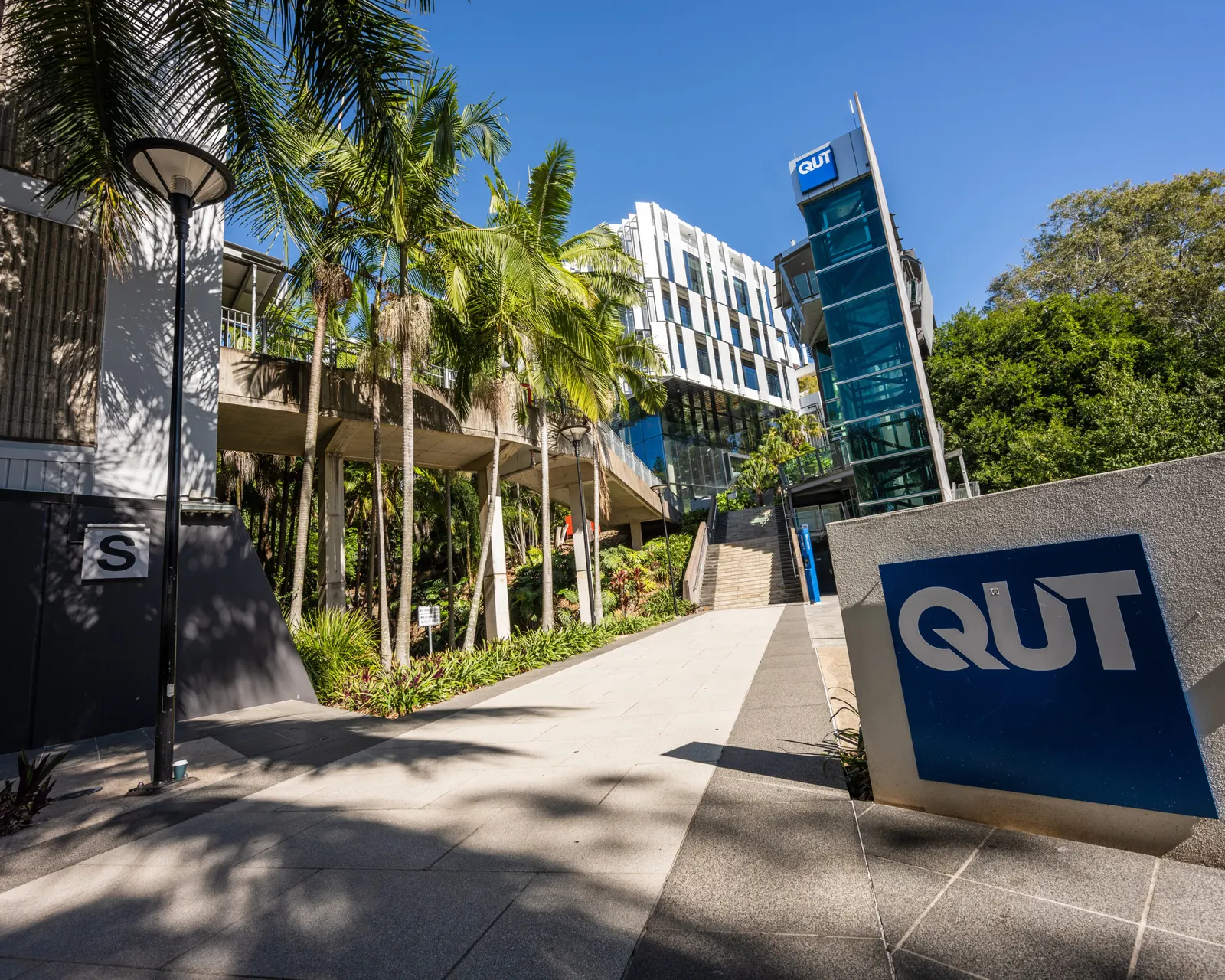
Queensland University of Technology's Faculty of Health is assembling a pool of casual Scientific/Technical Officers to support simulation learning across its nursing and paramedicine programs. The roles sit at the Kelvin Grove campus in Brisbane and pay $52.57 to $59.30 an hour at Higher Education Worker Level 5 (HEW5), a classification in which the 25 per cent casual loading has already been included. Successful applicants report to Nga Le, the Technical Services Manager for Clinical and Simulation.
The title sounds academic. The work isn't. QUT's simulation rooms are dressed as hospital wards, emergency bays and ambulance cabins, and a technical officer's job is to make those rooms hold up when a student is mid-assessment. A manikin that stops breathing, a debrief recording with no audio, a monitor that flickers, a pump that won't prime — any one of them turns a teaching session into a technical interruption, and the pool exists to stop that happening.
Setup, run, reset, repeat
A shift rarely looks the same twice. One day you're configuring a low-fidelity skills lab for catheter insertion practice; the next you're supporting a high-fidelity cardiac arrest scenario with a full interprofessional student group. The position description lists the spine of the work: prepare simulation rooms and equipment, operate recording and debriefing systems during scenarios, maintain and troubleshoot hardware and software, and reset spaces between classes so the next group starts on time.
The reset pace is where good technicians separate themselves. A missed cable or an expired consumable never announces itself at setup; it shows up at the worst possible moment, which is why the strongest operators treat setup checklists as non-negotiable.
I worked alongside a technician — call him Sam — who kept a laminated strip taped inside his control-room drawer: audio, vitals, recorder, clock. Four checks, about thirty seconds, before every scenario. The strip existed because of a morning when a debrief captured forty minutes of sharp clinical reasoning and zero sound. Nobody on the academic side noticed until debrief, and the students had to run the whole scenario again. That's the real failure mode of this job: not the spectacular crash, but the quiet miss that only surfaces after the teaching moment has already passed.
Pay, loading, and what casual actually means
The advertised range of $52.57 to $59.30 per hour is the HEW5 casual rate with loading included, and QUT pays employer superannuation on top at the current superannuation guarantee rate. For context, salary data from ERI puts the average Australian medical simulation technician at about $43.72 an hour, or roughly $90,930 a year, with a typical band between $65,651 and $109,115. The QUT casual rate sits above that average, which is what you'd expect once a 25 per cent loading is folded in.
Casual means hours follow the teaching calendar. Weeks fill up around practical assessments and scenario blocks, then thin out. That suits people who want flexible technical work alongside other commitments, and it frustrates people who want a guaranteed roster. QUT engages casual professional staff under its enterprise agreement, and the classification level reflects the skills in the position description rather than the hours you happen to be offered.
Why simulation support is expanding
Health courses lean harder on simulation because clinical placements are scarce and patient safety can't wait for on-the-job practice. In April 2025, Ahpra's independent Accreditation Committee published national guidance recognising clinical placements, simulation-based learning and virtual care as complementary, necessary parts of health practitioner education rather than a fallback when placements run short. That guidance gives universities a clearer regulatory footing to build simulated hours into curricula from the start, and it has quietly raised the value of the people who keep the equipment working.
The workforce arithmetic points the same way. Australian Institute of Health and Welfare figures show salaried health practitioners in public hospitals grew from 228,299 full-time equivalent positions in 2014–15 to 330,656 in 2023–24 — more than 102,000 additional FTE — with Queensland recording the largest increase of any state at 31,194 FTE. Separately, modelling published in Australian Health Review projects demand for nurses reaching around 560,000 FTE by 2040 against a supply of roughly 460,000, a shortfall in the order of 100,000. Bigger cohorts mean more simulation runs, more wear on manikins and heavier demand on audiovisual systems, all of which lands on technical officers.
Students at QUT train on manikins that breathe, blink and respond to treatment, and the university keeps clinical skills rooms open around the clock for practice, as its School of Nursing describes. The catch is that infrastructure alone doesn't deliver good simulation. A 2018 survey of Australian and New Zealand nursing programs found simulation embedded in curricula and valued as an adjunct or substitute for placement, but flagged staff time, training, resource development and evaluation as the real constraints on quality. That's the base rate: buying manikins is easy, staffing the rooms around them is the hard part, and casual pools like QUT's are one answer to the staffing side.
Who QUT is looking for
You don't need to be a registered nurse to be useful here, but QUT wants clinical fluency. The selection criteria ask for a bachelor degree relevant to nursing or paramedicine, or an associate diploma with relevant work experience, or an equivalent combination of education and training. They also ask for practical skill with high-fidelity and low-fidelity simulation equipment, well-developed problem-solving, and digital literacy that extends from Microsoft Office to the proprietary software that drives the manikins.
The panel is looking for evidence rather than adjectives. Instead of saying you're passionate about simulation, describe the time you re-patched an audio feed mid-session or repaired a manikin before the next student group arrived. A background in audiovisual production, electronics, IT support, clinical simulation or medical equipment can all map onto the duties, and QUT says candidates who feel weak on one or two criteria should apply anyway — the panel assesses achievement relative to opportunity.
QUT is also explicit about who it wants in the room. The university runs an Indigenous Australians Employment Strategy with a 3.6 per cent participation target, and Aboriginal and Torres Strait Islander people are encouraged to apply. Applicants need unrestricted work rights in Australia for the term of the casual engagement.
What this means for your application
Most applicants for this kind of role write a duties list. The ones who get shortlisted name the equipment and the fix. Go through the position description line by line and map each duty to a dated example from your own work — one sentence per criterion is enough. If you've operated a specific manikin or scenario platform, say which one; generic claims about technical support wash out fast.
The habit that predicts success in the job is the same habit that predicts a good application: documentation. The role asks you to maintain standard operating procedures, safety registers and asset records, so a cover letter that shows you already think in checklists tells the panel more than a paragraph of enthusiasm. If you want a fuller picture of the day-to-day before you write, the earlier breakdown of what the role involves and a separate explainer on how QUT's simulation team operates cover the mechanics in more detail.
A credential that travels: CHSOS
Simulation operations is a career, not just a casual shift. The Society for Simulation in Healthcare (SSH) runs the Certified Healthcare Simulation Operations Specialist (CHSOS) credential for people who do exactly this work, built for the operations specialist role rather than any single profession. Eligibility asks for two years of experience in a healthcare simulation operations role plus a bachelor degree or an accepted equivalent.
The exam is 115 questions over two hours, weighted heavily toward what you'd be doing in this QUT job: simulation technology operations carries 35 per cent of the blueprint, healthcare simulation practices 25 per cent, with the remainder split across instructional design, professional role and healthcare concepts. Certification lasts three years. For someone entering QUT's casual pool, a shift or two a week is also a path toward the two years of documented experience that credential requires — and QUT classifies its equivalent ongoing role at the same HEW5 level with an annual package of $90,916 to $102,545, so the pool has a ladder attached.
How to apply
Applications go through QUT's recruitment portal, and the full position description is worth reading before you start because it spells out the classification, the duties and the selection criteria in detail. If you want to ask something specific about the team or the equipment, contact Nga Le, Technical Services Manager (Clinical and Simulation), on (07) 3138 5629; general questions about working at QUT go to Human Resources on (07) 3138 5000.
The listing, with the application link and reference details, is also available on the AcademicJobs.com university jobs board. One concrete next step before you open the portal: write down the four or five pieces of simulation equipment you've actually used, note what went wrong with each and how you fixed it, and keep that list beside you when you answer the selection criteria.
- university-jobs
- healthcare-simulation
- paramedicine
- simulation-learning
- technical-officer