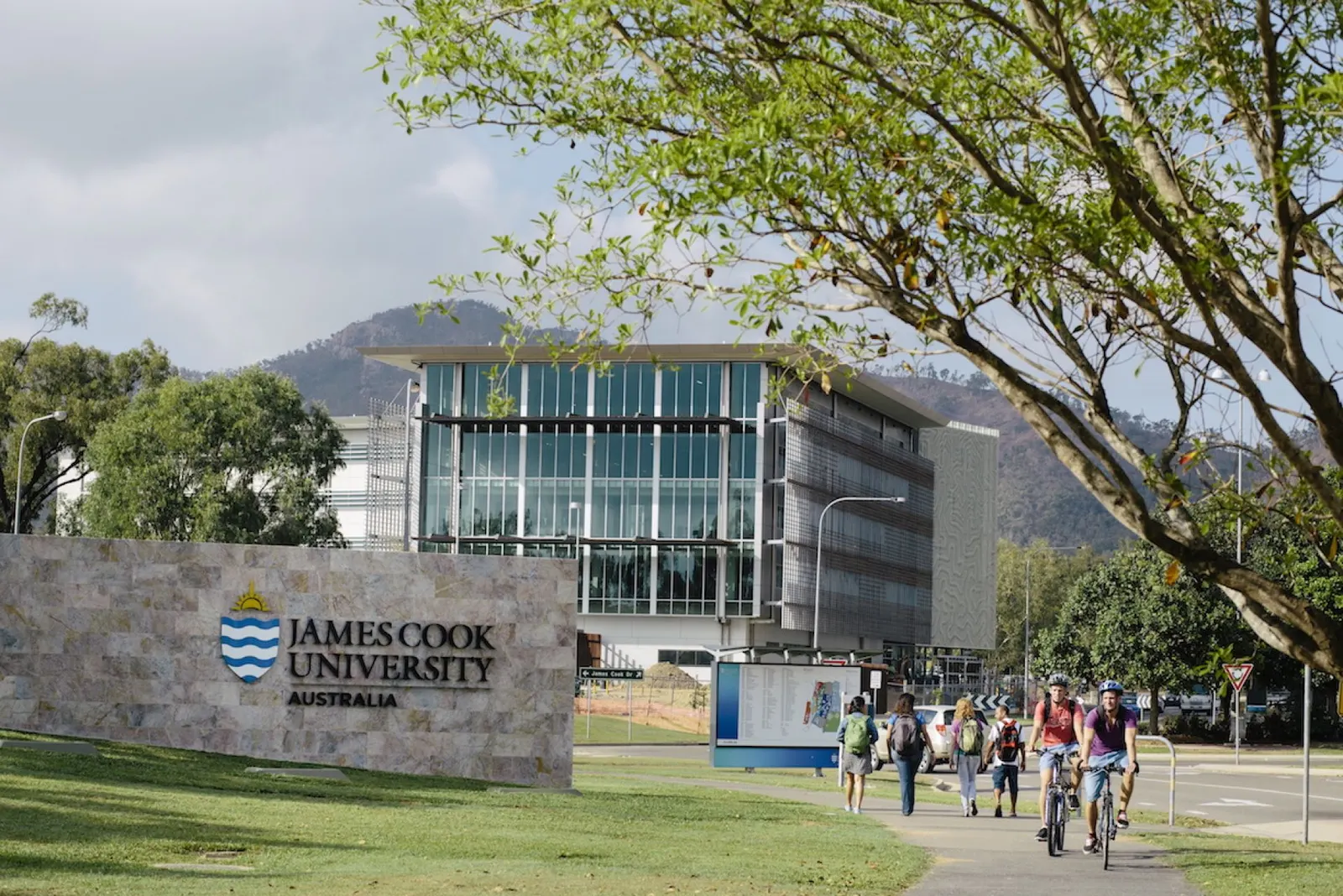
James Cook University (JCU) is hiring laboratory and technical support staff, but the advertisement works differently from a standard vacancy. It's a casual expression of interest (EOI) covering two campuses in tropical north Queensland — Townsville and Cairns — and it's open now on the university's careers portal, closing on 31 October 2026.
The EOI builds a talent pool. Faculties dip into it when a teaching lab fills beyond its timetable, a research group needs an extra pair of hands, or a field trip needs someone who can pack equipment without breaking it. The disciplines listed give you the scale of the thing: medicine, nursing and allied health, engineering, animal handling, aquaculture and the sciences across the board.
A Talent Pool, Not a Job
An EOI is a standing invitation, not a contract. JCU runs one because technical workload arrives in surges, and running a full recruitment process for every surge would be slow and expensive. Your application sits in the pool, and a supervisor contacts you when a shift matches your stated availability.
That means irregular hours. Some weeks bring a run of practicals to set up and pack down; others bring nothing. If you need a predictable roster, this will frustrate you. If you're a student juggling lectures, a recent science graduate building bench experience, a school lab technician looking for a change, or someone returning to the workforce after a break, the flexibility can work in your favour. The pool is also a real route into a team that hires continuing and fixed-term technical officers and advisors, all advertised on the same portal.
The listing carries reference number 495002.
What You'd Actually Be Doing
Laboratory and technical support at JCU is several jobs wearing one title. The listing describes delivering technical support for undergraduate and postgraduate teaching, which in practice means preparing reagents and glassware before a practical, calibrating microscopes, servicing and sterilising equipment, managing chemical and biological waste, and keeping the workspace compliant with Queensland's work health and safety (WHS) legislation.
You'll also brief staff and students on laboratory procedures and help evaluate how services are performing. On the Bebegu Yumba campus at Douglas in Townsville — the main campus, roughly 386 hectares of bushland with more than 10,000 students — demand skews toward health, veterinary and animal sciences, engineering and the core sciences. On the Nguma-bada campus at Smithfield, about 15 kilometres north of the Cairns central business district, the work leans toward tropical ecology, marine science, health disciplines and environmental science, with the Great Barrier Reef and the Daintree rainforest within reach. JCU has been teaching in the region since it opened as the University College of Townsville in 1961.
The Money, in Ranges
Australian university technical staff sit under the Higher Education Industry—General Staff—Award 2020 (MA000007), and JCU's own enterprise agreement builds on it. The university's continuing Laboratory and Technical Support Officer roles are advertised at HEW level 5, $78,740 to $89,310 full-time equivalent plus 17 per cent superannuation. The advisory tier runs higher: the chemistry Laboratory and Technical Support Advisor is listed at $90,821 to $98,369.
Casual placements carry a 25 per cent loading on top of the classification rate. As a benchmark, a Queensland university advertising a casual HEW5 scientific/technical officer recently quoted $52.57 to $59.30 an hour, loading included. That's the base rate to think with; a placement with supervisory or specialist duties can sit above it. The award also sets a minimum engagement of three hours per shift, dropping to one hour for students attending campus that day as students.
You can check the classifications and conditions in JCU's enterprise agreement, which governs how these casual placements are actually paid.
Who Gets Pulled From the Pool First
Most EOIs sit in the pool unread for weeks. That's the base rate, and it isn't personal: supervisors search the pool when they have a specific roster problem, and a generic application doesn't answer it.
The exception is the applicant who names their availability, their campus and their techniques. One technical officer I know — call him Sam — lodged an EOI that said he was available any time. Nothing happened for two months. He rewrote the top of the document to say he could work Mondays, Wednesdays and Fridays during semester plus vacation periods, at the Bebegu Yumba campus, and listed the equipment he had serviced. A supervisor called within a fortnight.
Precision beats enthusiasm here. A mislabelled sample or an uncalibrated pipette wastes everyone's afternoon, so the person reading your EOI wants evidence you'll show up on the Tuesday morning after a long weekend and get it right.
Living and Working in Townsville and Cairns
The two cities are different places with different arithmetic. Townsville, population around 206,000, was ranked Australia's most affordable city in a 2025 analysis that measured rent, utilities, groceries and transport against local median income; the same study placed Cairns, population around 179,000, among the country's least affordable. Rents have moved fast in both — PropTrack's early 2026 figures put all-dwelling median weekly rent near $550 in Townsville and near $625 in Cairns.
Townsville's economy leans on defence, mining services, health and education; Cairns leans on tourism, aviation, health and agriculture. Both are cyclone-region cities with a wet season from roughly December to April.
The work sits inside research infrastructure that matters nationally. JCU hosted the ARC Centre of Excellence for Coral Reef Studies from 2005 to 2022 and ranks first globally for coral reef science citations. Its Australian Institute of Tropical Health and Medicine (AITHM) runs nodes across Townsville, Cairns, the Torres Strait and Mackay, and JCU recently deepened a partnership with QIMR Berghofer on tropical health research. A casual technical role at either campus plugs you into that pipeline, even if your shift that day is washing glassware.
The affordability figures come with a caveat: housing costs are rising fast in both markets, so budget for the city you'll actually live in, not the headline ranking.
What This Means for Your Application
Treat the EOI as a roster solution, not a biography. The person reading it is trying to fill a Tuesday morning practical or a field-trip gear list, so lead with the things that solve their problem: when you can work, which campus you can reach, what you can do unsupervised, and which certifications you already hold.
List specific techniques rather than writing 'lab skills.' Microscopy, autoclaving, spectrophotometry, media preparation, chemical handling, dissection support, data entry. Name the equipment you've used. Mention your safety training — a current first aid certificate and a documented lab safety induction count for more than a long CV.
If you're moving across from a research-assistant background, the advice in how to excel as a research assistant in Australia transfers directly: frame the bench and field work you've done in terms a technical team can use immediately.
Keep it to one page. A four-page academic CV of conference posters doesn't help fill a casual shift.
Before You Submit
Several of the listing's requirements can't be produced the week a supervisor calls. Sort them out before you apply:
- A current Working with Children Blue Card — Queensland's application can take weeks, and it can't be rushed once a shift is offered.
- A current First Aid Certificate.
- A current Queensland C Class driver licence, useful for field trips and moving equipment between sites.
- For some roles, specific certifications or vaccinations — the listing flags these per placement, so ask which ones apply to your discipline.
When the pool is searched, the candidate who already holds the card and the certificate is the one who gets the call. Review the full listing on AcademicJobs, then submit your resume and cover statement through the JCU careers portal before 31 October 2026. Your one concrete next step: start the Blue Card application today. Everything else can be organised in a morning.